Building Material – SEASONING OF TIMBER

The process of drying timer(removing moisture or sap, Present in a freshly felled tree, under more or less controlled conditions timber is called Seasoning of Timber.
Seasoning is the first step in the efficient utilization of timber.Tree contain a large quantity of moisture roughly From 100% to 200%, based on dry weight of wood.A well seasoned piece  of wood may contain about 10% to 12 %  moisture.

Purpose Of Seasoning of Timber :

To minimize the tendency to shrink, warp & split. To reduce the weight for transport purposes , Handling and thereby reduction in cost. To increase strength, durability and electrical resistance. To improve the wood working qualities in timber including gluing, Painting and polishing. To make it capable to a  certain degree for protection from attack by insects and fungus.To make it fit for effective preservation treatment, otherwise the protective coat will close the outside pores and induce decay on the timber member.

Classification of Seasoning of Timber :

A)Prevention of drying of log:

The drying of the log should be induced by storing Them under water , which is incorrectly known as water seasoning.

b) End coating for preventing Splitting in Wood :

This can be prevented or minimized by coating the ends of logs and thick sections of all timbers with some kind of moisture proof substance , upto a distance of 80mm from the ends.

Some of the effective composition for end coating are given below :

1)Thick coat tar or bituminous paint.

2)Rousin and Lamp Black melted, mixed & applied hot.

3)Hardened Gloss Oil.

4) Paraffin Wax.

5) Molasses and lime (3:1).

Methods of Seasoning of Timber :

1)Air Reasoning or Natural Seasoning :

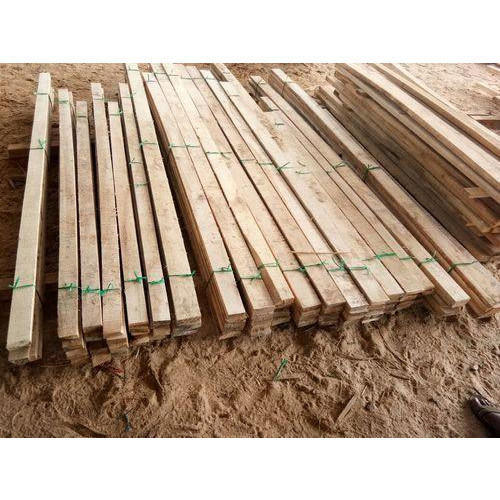
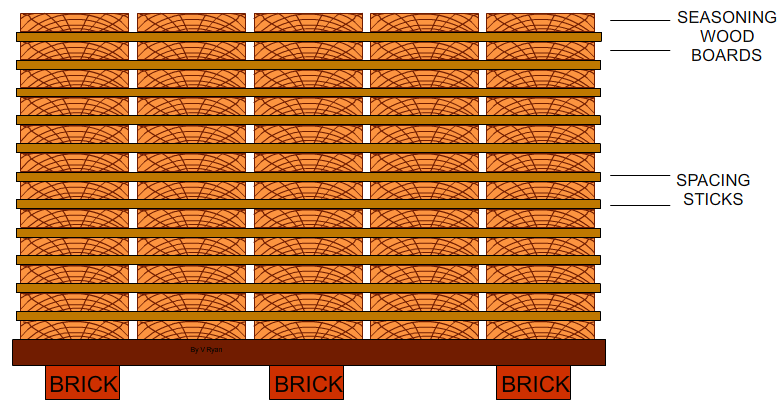
Provide free circulation of air so as to allow moisture to evaporate.This method consists in stacking the sawn timber in a dry place, should be made 300 to 450mm above ground level.

Long beam of strong timber, having cross section 100x 100mm, should be placed above the floor to serve as frame work for the stacking of timber.Air Seasoning is a slow process. Time Period depend Upon the size & type of timber, and season variations of climate.

a)Railway Sleepers :

The one and nine method is suitable for moderately heavy timber. The close crib method gives slower seasoning as it reduces the air circulation.This is recommended for stacking sleepers of refractory timber hot & dry localities. Containing about 100 sleepers

but center to center distance of crossers shall not exceed 1.5m.

B) Poles :

Poles should be stacked either in closed heaps or with  crossers.The center to center distance of crossers should not exceed 3m.

“Open Crip Method “ in which case, the alternative layers of poles are at right angle to each other ,leaving a space more than 8cm between adjacent pole in the layer.

The convenient height is kept 3m. The center to center distance is kept 1.5m.

C) Bamboos :

These should be stacked in close heaps on foundation to any convenient height.

D) Scantlings and Squares:

Stacked should be Crossers 50mm x40mm in cross section, which are kept 2.5 to 3m apart.The height of stack may be kept upto 3m.

E) Planks :

Stacking of planks should be thickness And cross section 40x25mm for planks upto 50mm Thickness. The center to center distance of crossers in each layer should be 60cm for planks upto 50mm thickness.

Advantage :

1)Simple & Economical method. ● 2)It does not require much skill and attention in the process of seasoning.

3)Slow Process, the chance of seasoning defects in the timber are comparatively less.

Disadvantage :

1)Slow Process.

2)Large Space required for stacking timber.

3)More Capital investment is required which is otherwise blocked till the seasoning is complete.

4)The moisture contents cannot be reduced less than 15 to 18%. So timber ,seasoned by this method cannot used on certain jobs for which the moisture contents required is less.

5) The timber can easily attacked by insects and fungi due to long period of seasoning even under favorable conditions.

Klin or Artificial Seasoning :

Seasoning of timber in a Klin. It is a quick method of seasoning. The moisture

content by this method can be reduced to the extent of 8 to 12 % and timber can be used in a short time and according to the climate conditions of the locality.

Construction of klin :

It is usually a masonry chamber equipped with arrangement for heating , humidifying and circulating air in the klin.

Construction of klin :

Steam is generally used for heating & humidifying the air in modern klins through furnace gases are also used for supplying  heat.It is also provided with propeller fans inside the chamber for rapid circulations of air.

Kiln seasoning

Method :

The stack of timber is made as for air seasoning and the trolley containing stacked wood is driven inside kiln and the doors are closed tightly .

A boiler for heating and power for driving the fans are also used steam is injected through the steam Pipes in the chamber while the heating pipes are kept At low temperature.Full Humidity is maintained by the steam and evaporation from the surface of the timber members is prevented in spite of the heat which gradually reaches inside the timber members.

This process is also known as desiccating.

Proper circulation of hot air is maintained by driving the fans.

Started at a comparatively low temperature & higher Humidity. Conditions Gradually when temperature of air inside the kiln is fairly high and humidity is low or reduced.

Special instrument such as moisture meter etc. are used for testing some pieces of wood periodically to check the per moisture content.The period of kiln seasoning is also variable Accordingly To thickness and species of timber (4 to30days for 25mm thick planks).

Advantage :

1)Shortest time under controlled process. ● 2)The wood can be used immediately as and when required.

3)It renders the timber less liable to shrinkage.

4) It renders the timber les liable to be attacked by insects and fungi.

5) Moisture content reduce as per requirement.

Disadvantage :

1)It is a costlier method through space required is less.

2) Skilled labour is required.

3)Being a quick process of drying, a continuous Attention and watch is required, otherwise the Timber Is liable to seasoning defects such as end splits, Surface cracks, warping , internal cracks etc.

https://www.facebook.com/ArchitectureInteriorDesignStudio/

BUILDING MATERIAL – Timber Structure , Sawing Types , Common Market Form & Size – Part 2

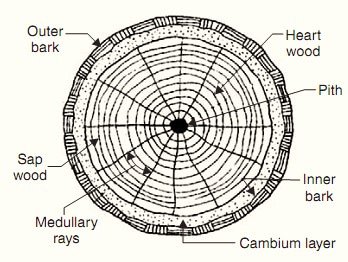
Structure of Timber :

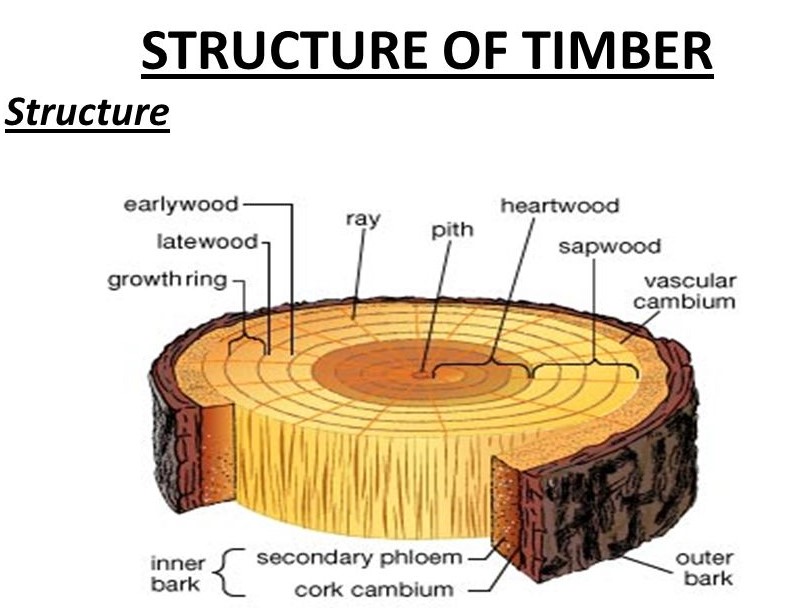
1)Pith : Inner most part having soft tissues near about the center of log of a timber.

2) Heart Wood : Inner Part of Log of a tree surrounding the pith is called Heart.

3) Sap Wood : Outer Part of log of a tree surrounding heard wood & upto the bark which contains living cells Is called Sapwood.

4) Cambium Layer : Layer of liquid material deposited below the bark & outside the sap wood in the log called Cambium Layer.

STRUCTURE OF TIMBER Structure

5) Inner Bark or Bast : The inner skin surrounding The Cambium Layer. This skin feed & covers the Cambium Layer.

6) Outer bark : The covering outside the log of a tree.

7) Annual Ring : Concentric innumerable rings in the log of a timber,Indicating its growth are called Annual Rings.

8) Medullary Rays : Horizontal thin fibrous tissues which extended radially from the cambium layer towards the core or from the pith towards the bark.

Types / Sawing of Timber :

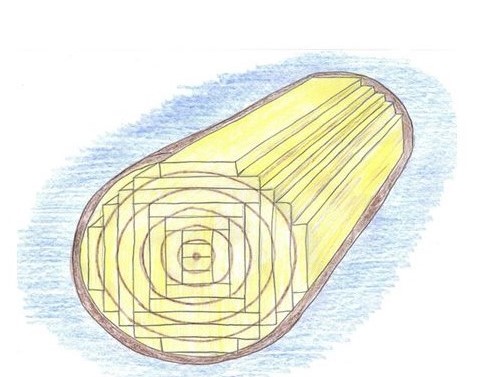
Ordinary or Slab Sawing
Tangential Sawing
  1. Ordinary or Slab Sawing : Most economical method As the wastage of timer & cost of sawing minimum.Cuts are made into the log of wood according to the required thickness, not necessarily tangential to the annual rings.
  2. Tangential Sawing : The board & planks are sawn out of wood tangentially to the annual rings. Economical due to less wastage &involves less Labor do not suit for heavy works as for flooring.
  3. Quarter Sawing : Log cut into four quarters. These quarters have their flat faces essentially radial.Cuttings the annual rings at angles not less than 45Degree. It requires more labour & involve more Wastage.
  4. Radial or Rift Sawing : Log cut out of quarter logs Parallel to the medullary rays & perpendicular to the annual rings. Uneconomical method. It produces timer with end grains which are sometimes known as “Silver Grains” by sawing parallel to the medullary rays.Used for High Class decoration & joinery work.
  5. Combination Sawing : Log is converted by the Combination of two or three methods.Advantages of Ordinary & Radial Sawing.

Common Markets Forms & Sizes of Timber :

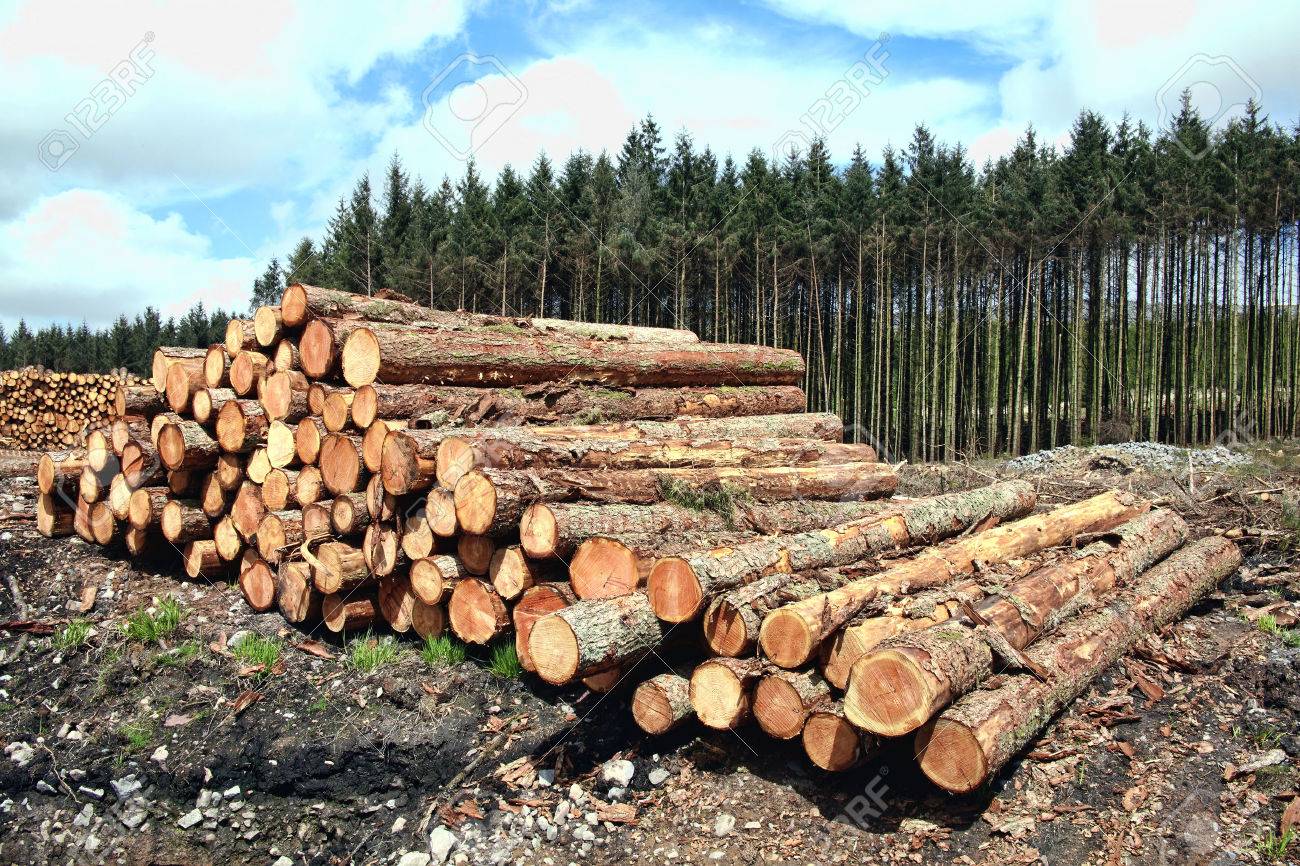
A) Log : Stem or trunk of a tree which is felled.

Log of Timber

B) Baulk : A piece of sawn timber, cross sectional Dimension of 50mm in one direction & 200mm in other.

C) Bole : The main stem of a tree

D) Bolt : A Short log 1.25m or less in length.

E) Billet : Short length of a thin stem or branch wood.

F) Batten : Piece of sawn timber, the cross sectional dimension of which dn’t exceed 50mm.

Batten of Timber

G) Plank : Thickness not exceeding 50mm & width exceeding 50mm.

h) Board : A thin plank under 50mm thick & 100mm More Width.

I) Cant : A thick piece of timber with or without squared edges.

J) Deal : A sawn piece of wood which is 50-100mm thick & 200-250mm wide.

K) Deal Wood : Light timber used for packing cases,crates.

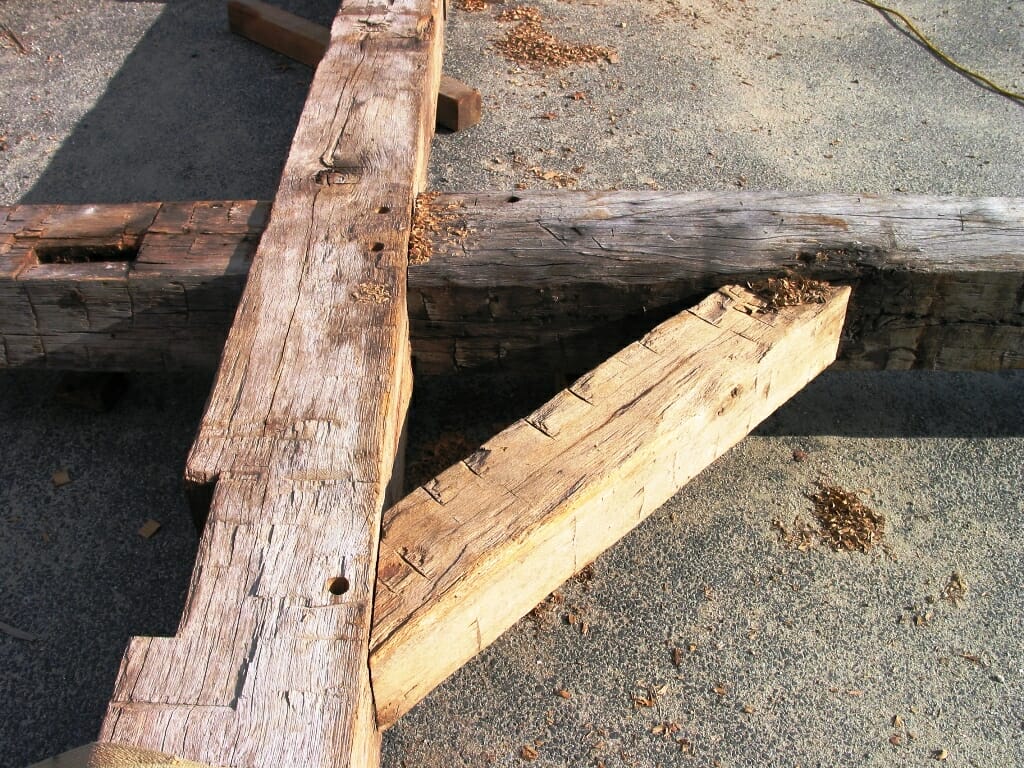
L) Hewn timber : Timber converted to size by an axe and the end.

Hewn of Timber

M) Pole : A long, soild, straight trunk of a tree 100 To 300mm in dia.at breast height & gradually to the top, Of a diameter of 100mm or more.

N) Post : Timber member used in upright position in Building fencing or structural work is called a post.

Timber as a Railway Sleepers

O) Scantling : Sawn Piece , dimensions of which Exceed 50mm in both the direction bt dn’t exceed 200mm In length.

P) Slat : Wood about 185mm x 65mmx 6mm in size.

Q) Sleeper : Transverse supports under rails in a Railway track. 250mmx125mm or 200x115mm.

R) Strip : under50mm thick & less than 100mm wide.

https://www.facebook.com/ArchitectureInteriorDesignStudio/

https://www.instagram.com/tanyadecor1/

BUILDING MATERIAL – Timber Types & Classification

Timber derived from Timberian which mean to build.The wood used for building or other engineering purpose is called timber.

It is a first construction material used by a man since pre-historic ages.

Timer is a natural material. Trees provide shelter from sun and the rain.

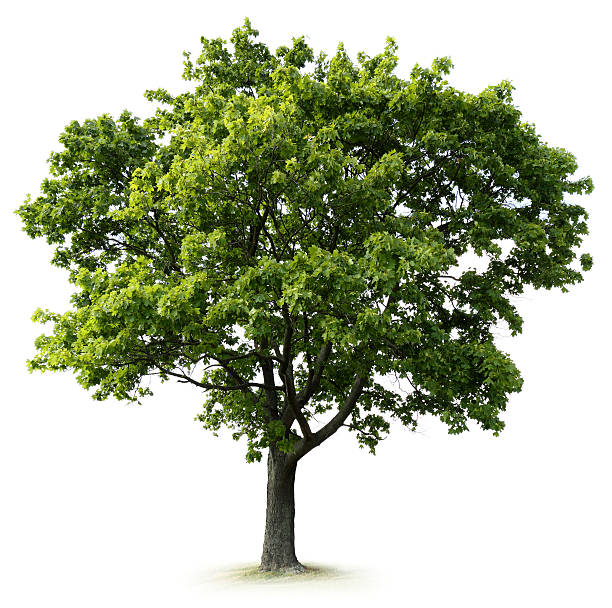
Tree: Maple Tree

Trees conserves soil moisture. It precipitate rainfall & lower temperature .A single Tree can cool the summer heat better than 20 Air conditioners.

It prevents depletion of the ozone layer of the atmosphere. It prevents soil erosion.

Trees produces oxygen and purifies the air.

Timber :

Timber

Timber obtained from trunk of a tree. There are many varieties of timber available all over the world.

Advantages :

Timber is strong than any other material. Timber can be easily worked to any size & shape. It can be jointed to required form.

Timber can used for furniture & decoration fittings. Structural connections can be easily made in timber. Timer are light in weight, quite durable.

Its resale value is good. Its non conductors of heat & sound.

Timber uses in construction

Classifications of Timber :

1)Exogenous Trees

2)Endogenous Trees

Exogenous Tress :

Trees which grow outwards and increase in bulk by the formation of successive annual rings are known as exogenous trees.

Exogenous Trees Structure

Timber which is used for building engineering works,Is Mostly obtained from exogenous trees. Examples : Deodar, Kail, Sal, Teak, Shishum, Chir etc .

Exogenous trees are further divided into following two types:-

1)Conifers or Evergreen Trees

2)Deciduous or Broad – Leaf Trees

Conifers or Evergreen Trees : Soft Wood

Trees which remain evergreen & bear fruits.These trees usually yield soft wood & show distinct annual rings. They are light in color & weight.

They can easily split & are resinous. They are comparatively weak in strength. Example :Pine, Deodar, kail, Chir,walnut etc

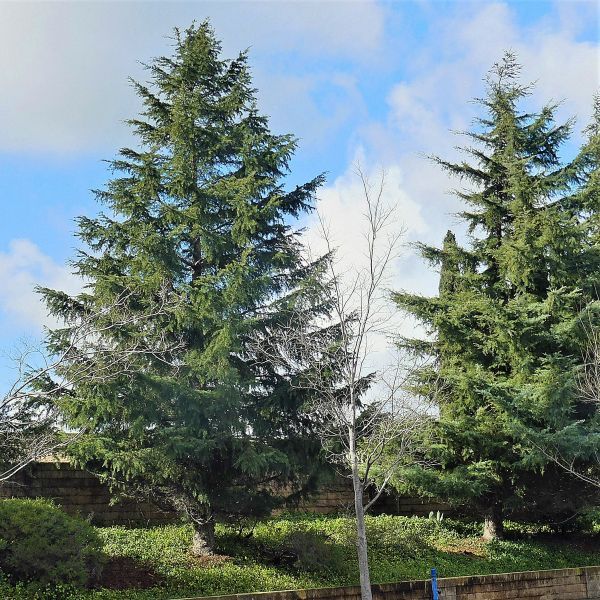
Deodar – Conifers Tree

Deciduous or Broad Leaf Trees : Hard Wood

Trees which shed their leaves in the autumn &put on new leaves in the spring season are known as deciduous or broad leaf trees.

These trees usually yield hard wood & dark in color, Hard, close grained and strong.They are useful for important engineering works. Example :Sal, Teak, Shishum, Babul, Ash, Mahogany etc.

Deciduous or Broad Leaf Trees

Endogenous Trees :

Endogenous trees which grow end wards in a longitudinal fibrous mass are known as endogenous trees.

These trees are too flexible & aren’t suitable for engineering works.Example : Canes, Bamboos , palms etc

Endogenous Trees Structure

Comparison Between Hard Wood & Soft Wood

https://www.facebook.com/ArchitectureInteriorDesignStudio/

https://www.instagram.com/tanyadecor1/

Accent Wall Ideas ( Transform Your Rooms )

Accent walls aren’t just a trendy statement, An accent wall designed in a room, whether a bedroom or a living space, It help you focus attention to certain areas of the room.  they’re a cost-effective way to spice up your home. It may make the room feel bigger, or even make it feel cozier and more inviting.

 First decide on the right wall. The general rule of thumb rule , use the wall that first grabs your attention when you enter the room.

Painting Bold & Texture Color –  Selecting the right color that might be the most difficult step. Thumb Rule for color ratio 60-30-10 rule when picking out a color: 60% of the room should be your dominant color, 30% should be a secondary color, and 10% should be an accent color. With that in mind, you’ll want to find a very minor color in your current color scheme–likely something bold or bright that will differ dramatically from the other colors in the room–and work with that.

If you’re wary of committing to a permanent accent wall (although I blink at the idea of paint’s being considered “permanent”), remember than an accent wall can actually be the same form and color as the rest of the walls in your home; it’s what you DO with the wall that makes it stand out. 

Gallery Wall to create a Focal Point –  A wall of framed photographs, making that wall stand out with a distinct color or design can also bring more attention to those décor elements. A large mirror, piece of art, or many smaller photographs grouped together on an accent wall can immediately bring attention to them. A perfect way to display your love for the family with a gallery wall. You can choose any design or even make a family tree to display the beautiful memories you’ve made.

Wall paper –  By using of wall paper you save lot of time for application . It hardly 5 to 7 hour job depend upon the area how much big /small. In these day there are so many color design, 3D, 5D,Floora print, Plain, Texture etc wall paper available in market.

Lighting – Giving Led Lighting Effect for your accent wall which enhance more beauty of accent wall. Lighting should be well designed. Lighting should Not be too much. You can use warm light for relaxing the ambiance.

Laminate – You can complement the beautiful look of your floor by making a statement laminate flooring on your walls. It look and feel of real hardwood. This is a creative way to use it on wall and the same time it’s a budget material also and easy to install. Laminate 

Graffiti – Graffiti looks stunning on a feature wall or sprayed to highlight interesting detail. Graffiti can make impact in all kinds of interior spaces such as cafeterias, hotel lobbies, bedrooms, kitchens, living areas. Graffiti can be applied on almost any surface and material. Thanks to these properties, Graffiti can be a fun DIY project, I would like to mention that graffiti paints are durable, strong and do not require priming before application.  The painting is resistant to fading and mechanical damage.

It is environmentally friendly and doesn’t emit toxic substances in the air. The painted surface is very easy to maintain and is possible to wash with soap and brush. Graffiti creates great possibilities in interior design: from hiding architectural flaws, visually changing dimensions of the room to decorating walls that look too “empty”. Airflow easily transfers the ink in hard to reach places.

Graffiti mural wallpaper for teenagers

Hard-Working Chalkboard Accent Wall –  The chalkboard-iness of this wall is tastefully downplayed by letting it double as an art gallery wall. For those with kids, scribbling on the wall may be a nightmare! But if you have a chalkboard painted wall then it can double as a canvas for you and your kid!

Art Display –  You can also hang artefacts like made of metal, plastic or even create a design by arranging them symmetrically. You can find accent pieces in any store and they are easy to replace as well. If you’re not keen on spending loads of money on an accent wall then you can always create something new. Use old cutlery or paint a plastic paper plate and hang them on the walls 

Geometric Pattern –  This season has turned the spotlight on interior design’s main ingredient – geometric. Geometrical patterns combine to create a look that is pleasing to the eye. This trend is all about balancing colors, prints, and textures as they seamlessly enhance each other without being too overwhelming.

Metal –  Punched metal, also known as perforated metal, A unique look to accent a full wall or a half wall in a room is to use the panel as an accent over an existing wall. Choosing stainless or aluminum punched metal sheets will give a more modern look, while a brass or copper panel will give more of a traditional or antique look.

The shape of the perforations themselves and the pattern or irregular placement of the perforations will also contribute to the style and impression of the panel in the room.

Wall Tile work –  A tile accent wall use them frequently in bathrooms, bars, and even in bedrooms and other spaces. There are some really amazing tiles that will wow you and create huge impacts in a home. 

3 D Panel –  3D wall panels are ideal wall covering products that can be used in interior and exterior decoration. They are great solutions to ugly, stubborn problematic wall, Get wall design ideas and inspirations for your accent wall project.  

3D wall panels give an extra dimension to your walls and compliment just about any room in the house. 3D Wall Panels are an exciting range of decorative, textured wall panels with patterns carved into their surface. A feature wall in 3D wall panels creates a huge impact, lending an architectural feel to the room at relatively little cost.

Mural –  This fantastic idea, other than to choose a mural scene that speaks to you. This accent wall idea is wonderfully simple and full of charm and character.

Fabric Wall – Fabric can be used in a way similar to wallpaper to create an unforgettable accent wall. Bonus: In a Bedroom, an accent wall can even double as the headboard.

Mirror –  Mirrors don’t just look dashing but also make the room feel spacious and airy. Add a mirror or a collection of them to pull off a glamorous look.

Decorating your home with mirrors is a great way to liven up a space and add a touch of visual excitement. With so many styles, shapes and colors.  A mixture of circular, square and other shaped mirrors will add an intriguing element to your space while making it appear larger at the same time.

Shelf – If your favorite feature in a room is the beautiful built-ins, emphasize this by transforming the shelves into an accent wall. Paint out the back wall, but leave the shelves as they are. The use of monochromatic pieces on said shelves will go a long way to emphasize the accent wall itself.

Natural Stone – To bring more of the outdoors indoors, there’s nothing like the natural beauty of natural stone. Stone accent walls can add more than just interest to a room; they add depth, dimension and design! So, if you have a room that could use a boost, consider using natural stone as a way to get that dream job done.

POP Molding – Putting molding walls got a bad reputation when so many builders decided to put a single piece of molding around the room called a chair rail (literally one of my least favorite things). However, molding on a wall can look super sophisticated. From the traditional picture frame molding to the more contemporary box molding

Wood –  When it comes to statement home improvements, a decorative wood plank wall contributes a polished look with timeless appeal. Providing warmth, texture and rustic-sophistication to any room I tend to lean more towards the modern use of wood as an accent wall, but for clients who love that “farmhouse” style, you can also use reclaimed wood. Make the living room the focal point of your home with a breathtaking wood wall.

A great way to create a warm and inviting space, a feature wood wall is the perfect way to easily accentuate any living space. Add a decorative plank wall to any bedroom to unleash tranquil vibes. Whether you decide to plank a full accent wall or create a chair rail, your bedroom becomes your personal haven with the presence of a plank wall. Providing a warm and cozy feel, simply peel, stick and relax.

There are plenty of wall accents that give your home an instant uplift but all you need to do is think creatively.

https://www.facebook.com/ArchitectureInteriorDesignStudio/

https://www.instagram.com/tanyadecor1/?hl=en

https://twitter.com/?lang=en

Retail Lighting Importance & Trend

When setting up your retail store, there are a lot of questions in your mind : how to best display your products, how the general layout of your store should look, and much more.

Retail Lighting for Product Display & create a ambiance

What about lighting design? While lighting may be an afterthought for many retailers who are just starting out, retail lighting can provide much more than simple ambiance. This basic utility can also impact your sales and customer experience.

In the right light, at the right time, everything is extraordinary.” —Aaron Rose, photographer

Retail lighting varies depending on the type of store, product/ brand goals, and merchandise being displayed.

Lighting can contribute to a unique shopping experience that keeps customers coming back. Some retailers are installing consistent lighting as an extension of their brand, Some use lighting to create multiple dynamic spaces to make their stores more of a destination.

For example, jewelry stores often require very small point sources with relatively high color temperatures to make gemstones sparkle while favoring lower color temperature sources for areas displaying gold. It’s all about using the best lighting solution to create a unique store experience that attracts shoppers and keeps them in store. – for example, fashion, car showrooms, electronics stores and supermarkets.

Big-box stores typically prioritize energy efficiency, maintenance, uniformity of light levels, and low installed cost.

Boutique applications typically prioritize color quality, visual comfort and setting a desired look. Both are typically concerned with using focal lighting to accent and promote key merchandise.

Warm, soft lighting can make people feel relaxed and comfortable, while brighter lighting helps customers see products more clearly.

Shopping is primarily a heads-up visual activity, achieving good vertical light levels (typically 6 ft. above the finished floor) is often more important than horizontal light levels (typically 3 ft. above the finished floor).

Lighting depending on store design and merchandise displays, once a general light level is established, the accent/feature display and vertical/perimeter lighting systems can be determined.

Accent lighting to achieve the most dramatic and visually interesting displays, a contrast of five to 10 times the ambient light level is most effective. While all this is more easily taken care of in new construction projects, we find a lot of accent lighting in existing stores has become marginalized over the years.

 LED lighting is becoming increasingly popular in retail spaces in both new construction and upgrades. “LED lighting has become the proven path to better light for retail applications

LED sources allow retailers to dramatically lower the cost of ownership through high system efficacy, long life and high color rendering.

Integrate/Decorate – LED lighting more easily integrates into store fixtures and architecture, making the lighting disappear. Alternately, the lighting can stand out as a decorative element

Volumetric Lighting – Selecting luminaries that throw light on walls and ceilings can make the retail space appear larger and more inviting. “This is a particularly important trend in big-box retail where a lack of light on the high ceilings often creates a cavelike, gloomy effect, while glare can make it difficult to see products on the top shelf”.

Finding Your Fixtures – One way to create an atmosphere with your lighting strategy is through the light fixtures. Break up your space with a mixture of light fixtures in different parts of your store, like the entrance versus the changing rooms.

Choose a Temperature – you can create an inviting atmosphere in your store is by using a warm or cool temperature of lighting — there are benefits to both color schemes. Lux states that “Cool color temperatures such as cool white make areas appear more spacious whereas warm color temperatures create an impression of smallness and familiarity.”

So, if you have a small store that you’re trying to make feel larger, consider using cool lighting.

https://www.facebook.com/ArchitectureInteriorDesignStudio/

https://www.instagram.com/tanyadecor1

Vastu Tips for Commercial /Office

Vastu Shastra  is a science that deals with the construction and architecture. . It helps in maintaining a positive flow of energy in the constructed area and brings good luck and prosperity in commercial/office space.

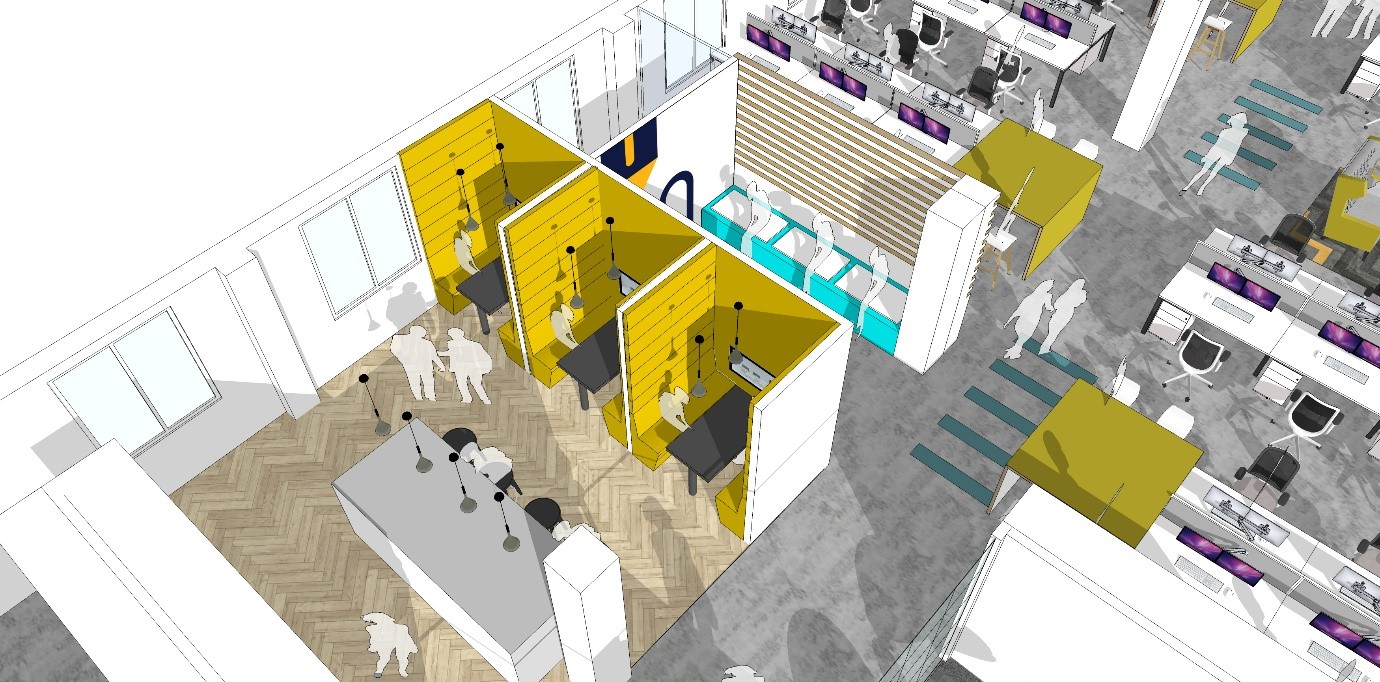
An Meeting area for the office

where reasons and logic of science are used.  Rules of Vastu Shashtra are observed by balancing the five elements of environment‘Panchabhutas’ (Water, Fire, Earth, Air, and Space). These rules define the directions and state what to place where and what should be avoided for the growth and prosperity of business.

‘Panchabhutas’ (Water, Fire, Earth, Air, and Space)

It is important to build an office /Commercial as per the guidelines of Vastu. If you are planning to purchase or renovate a commercial space for your business, here are few tips which you should keep in mind  for help in selecting the best Plot as per vastu directions & shape, layout, space arrangement, principles of design, entrance, Lockers, furniture etc.  

Plot Shape  &  Direction– Plot should be Rectangular &  Shermukhi plots. A rectangular plot of side ratios between 1:1 to 1:2 are best suited.  but if it is not as per Vastu guideline, then the irregularity can be treated with various Vastu remedies.

According to the Vastu Shastra, the office/Commercial should always be North.
It is believed that North direction brings a lot of positivity and good fortune for business and is considered as an auspicious direction for all office space.

Entrance –  An office/commercial  should be in the North, North-East or North-West facing direction. These directions are considered to bring good fortune and positivity for business & the most auspicious directions for office spaces as well as commercial space. It makes employees feel fresh and very productive.

North Direction ( Kuber (the lord of wealth) direction), thus it profits you in financial terms as well.

East Direction – East direction the direction of a Service industry related office. East    is a sunrise direction and it gives great growth to the work.

Reception /Welcome Area –

First impression on the visitors.  The reception area should be very relaxing and one that gives positive vibes.

Welcome room should be located in the East Direction or the North-East Corner of the Plot/space. It is advisable to put a photo or idol of God in the reception area, and the Reception desk should be placed facing North-east direction. Decorating flowers and offering sweets in any way creates a positive aura and good relationship value with the visitors.

innovative table designs Wonderfully The fice Furniture Blog at ficeAnything Furniture

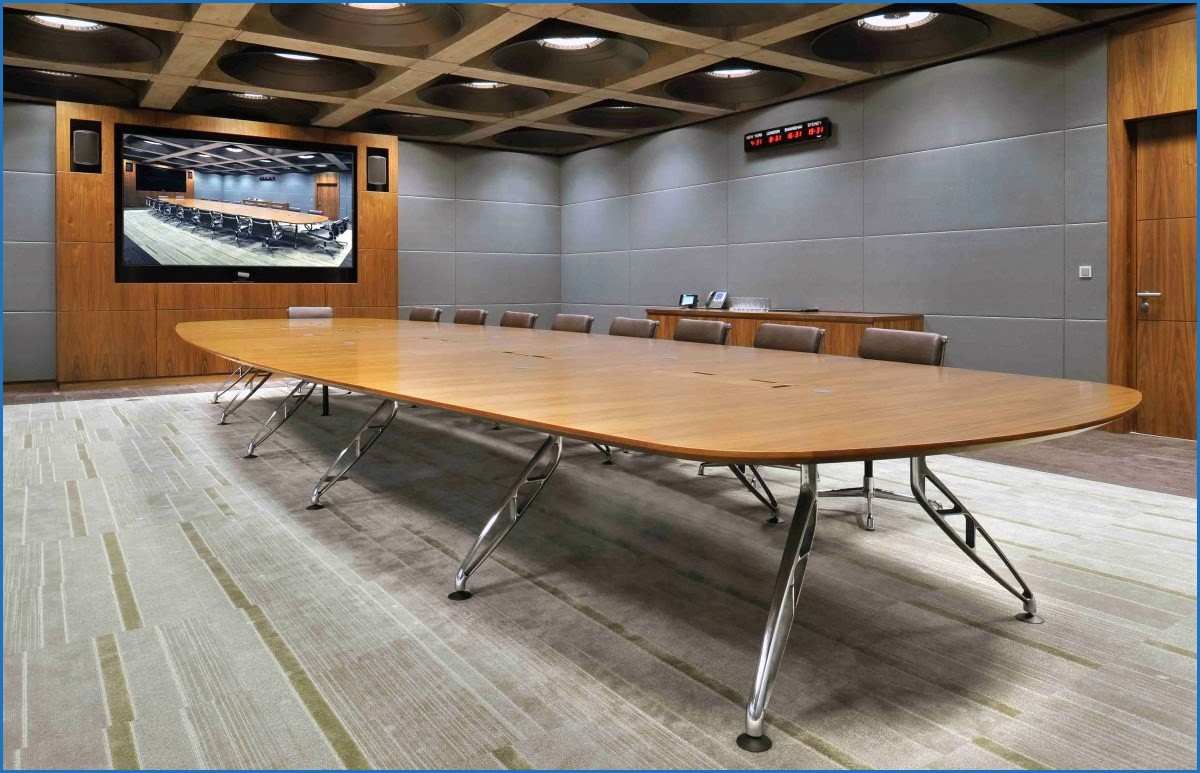
Conference Room – should be placed in the north-west direction. These zones can spur on projects, bring you good and reliable clients and ensure that sales and dispatch go well. For gaining useful connections, keep the North-West zone healthy. This will generate support and help from investors  and lenders.

Finance department should be in the north and east zone and employees dealing with bank and cash transaction should sit facing east and north direction. All the financial records should be kept in central north or southwest of the cabinet.

Business Head –  Business head should occupy a cabin in the western part of the office & facing towards East or North direction. . Also, make sure the temple or pictures of any Idol or God must not be placed at the back side of the owner’s seat.

Seating Arrangement – The seating arrangement in the office must be planned according to Vastu tips for office. For the Manager, Director and Executives of the office, the seating arrangement must be in the Southwest, South or West zone of the office as per commercial Vastu. The seating arrangement must be facing towards North or East while working in the office. Working while facing towards North or East direction increases the productivity of the employee. Plot Shape  &  Direction– Plot should be Rectangular &  Shermukhi plots. A rectangular plot of side ratios between 1:1 to 1:2 are best suited.  but if it is not as per Vastu guideline, then the irregularity can be treated with various Vastu remedies. According to the Vastu Shastra, the office/Commercial should always be North. It is believed that North direction brings a lot of positivity and good fortune for business and is considered as an auspicious direction for all office space.

Storage Rooms –  should be in the south west. Waste material, too, can be stored in this direction. 

Washroom – Washroom should be constructed in the West or North-West direction. Also, make sure the washroom is not in North-East, South-East or East direction.

Pantry –  Pantry is very important in an office. Pantry should be located in the South-East direction; it is known to be the ideal direction & never construct a pantry in North direction.  

One of the most important things is one should keep in mind while eating in office is that there should be a separate place for eating. It should not be painted in pink or red color.

Staircase – Best direction for Staircase in South or South-West. Make sure you dont construct one in the center of the office as it may lead to financial loses to the owner. And staircases must be painted in subtle light colors.

Colors – As per Vastu for Office/Commercial the décor and colors of the office should be bright and vibrant. Bright colors are known to spread positivity in each corner and it reflects light to all the directions.Using colors like blue, white and grey makes the aura cheerful. White, creams and tone of yellows can be used for Southeast, East, Northeast and Northwest walls.

Kitchen color scheme as per vastu

https://www.facebook.com/ArchitectureInteriorDesignStudio/

How to Choose Color Scheme for Your Room Interior

Did you know that color psychology can affect the way you think and feel ?

Example the bright blue in a clear morning sky makes us feel alive and free; the deep purples and reds in the flowers that bloom in Spring evoke emotions of warmth, life and energy. It’s true! That why you have to more careful when you choose the colors for your room.

Decide what mood you want to convey your guest throughout your home. Relaxed, dramatic, romantic, etc. This will help guide you in terms of color saturation (how intense/bright the color is) and how much of it you use.

Choose 2 -3 of your absolute favorite colors & than choose complementary color. Create a mood board for a better picture. After That Go for Paint work , Upholstery & Furniture , soft furnishing (curtain, cushion , Rug , bed sheet etc.) , Lighting & Last choose the Statement Piece for  complete look of the Room.

Types of Color Schemes –

Monochromatic – A monochromatic color scheme is one where different shades of one color are used. For example using different shades of blue, ranging from pale to navy.

Analogous – An analogous color scheme is one where you use colors that fall next to each other on the color wheel. For example, using green and blue. The analogous color scheme refers to using three colors in a row on the color wheel. Typically, two colors will be either primary colors with the third shade being a mix of the two and a secondary color. For example, you could choose red, orange, and yellow or red, purple, and blue. The key to using this color scheme successfully is proportion. Again, the 60-30-10 Rule comes into play. 

Color Wheel

Complementary – Complementary colors are positioned opposite each other on the color wheel.  Every primary color has a complement that creates a vibrant contrast. If you like the idea of a complimentary color scheme, but are afraid it may be a little too bold for your tastes, split complimentary is a safer choice. you would first choose your base shade. Then, instead of choosing the color directly opposite of your base, you chose the two shades on either side of the opposite color.

Complementary Colors

Those two shades will provide a much needed sense of balance to the room. 

Warm – Red, orange, yellow and the colors in which they show dominance (or the colors with these as undertones).

Warm Color

Cool – Blue, green, violet and the colors in which they show dominance ( or colors with these as their undertones).

Accent colors – These are the one which are used to create the ‘pop of color’, these have to be intense and bright with an opposite undertone. Remember, with the accent color ‘less is more’, use it as minimum as possible, instead of creating small spots of this a big, bright focal point shall be ideal. This is totally an optional color, but adding this will create a nice break and thrill in your décor.

Succulents Plant (Most Popular Plant for Indoor)

Succulents have long been one of the most popular types of indoor plants (House as well as Offices). They are popular because they are relatively low maintenance, require little watering or pruning and some species need very little light to thrive. Succulents originally came from dry, arid areas such as deserts.

Sansevieria ( Snake Plant)

They come in a wide range of shapes and sizes and require very little care.

Some succulent species that don’t require a lot of light, which makes them the ideal choice for spaces devoid of natural light.

Succulents Plant thick, fleshy, sap-filled leaves that are their trademark. These leaves allow them to hold and retain water more effectively than plants with thinner leaves.

Charming Faux Artificial Succulent Plants Emulational Plants for Office & Home 

They grow slowly and do not need to be pruned.

They do not need much water, people have a natural tendency to want to water plants daily. This should not happen with succulents.

Aloe is a succulent and the sap inside the leaves of that plant are known for helping with burns and have been used to make cosmetics such as face creams.

However, keep in mind that most succulents grow in very sunny, dry areas, such as deserts and other arid climates.

Most Popular Plant – ZZ Plant, Sansevieria ( Snake Plant) , Cacti,Aloe.

ZZ Plant

Group several succulent plant together they look nice, most species can co-exist pretty well.

There is no planting season involved. You can set up a succulent garden indoors any time of the year. However, if you are looking to plant succulents outdoors, it might be best if you chose spring or summer.Although succulents are hardy and can even survive the winter pretty well, succulents need to be planted when the soil can be worked. – they will likely do much better if planted in warmer months.

Leaves of your succulent are turning yellow or brown then something is not right. Although Succulents do well with little water, they cannot handle zero water. Yellowing leaves is generally a sign of extremely dry soil.

Water only when the soil is completely dry.

Sunlight is essential for a succulent’s development — most need at least 3–6 hours of direct sunlight per day. Plant or place in a space where it can receive plenty of sunlight, like a south- or east-facing window. Rarely, too much direct sunlight can “sunburn” a succulent .

Succulents are used to extreme temperatures the majority can survive in temperatures ranging from about 40–95º F. the temperature that you keep the succulent in should be tied to the amount of water it receives.

Succulents don’t need a lot of water due to their desert climate adaptations. The general rule of thumb is to let their soil dry completely before watering them again. If the environment is very hot and they have an effective drainage system they may need to be watered more frequently — about every 2–3 weeks because their soil will dry up faster. As the weather gets colder, you will need to water them less.

Graptopetalum paraguayense (ghost plant, mother of pearl) Succulents

Most succulents are not toxic Aloe vera are frequently used as ingredients in many delicious dishes. Some succulent varieties, mainly cacti, have spines that could puncture skin so keep an eye out for that., there are some varieties you should avoid if you have little ones or fur babies running around your home.

Succulents toxic to humans:

  • Euphorbias — thier sap can irritate skin and cause stomach pain if ingested

Succulents toxic to pets:

  • Aloe vera — can cause lethargy and digestive issues if ingested
  • Crassula ovata (jade plant) — ingestion can cause stomach issues
  • Euphorbias — their sap can cause a rash and stomach pain if ingested
  • Kalanchoes — rarely fatal but ingestion can make animals sick
Crassula ovata (jade plant)

Non-toxic options:

Echeveria varieties , Graptopetalum paraguayense (ghost plant, mother of pearl), Sedum morganianum (burro’s tail, donkey’s tail), Sempervivum tectorum (hens-and-chicks)

Sempervivum tectorum (hens-and-chicks)

https://www.facebook.com/ArchitectureInteriorDesignStudio

https://www.instagram.com/tanyadecor1

Vastu Tips For Puja Room

Create a room where you can worship /meditate is called Puja Room. Its doesn’t matter how big r small/ corner Puja room. Indian apartments are mostly crunched for the space. But if you ‘re among the lucky ones to be blessed with a separate space for meditation at home.

Puja room or prayer room is and must be one the most auspicious and sacred rooms of your home.

This is the space were stress-busters that served the purpose to connect with a higher power and keep the mind in balance.

We create a room where you get to charged with positive energy when you do meditation. That positive energy will energize our house ambiance & give peace to mind, body & Soul. We are creating a room to get charged with positive vibrations every morning and that energy will energize our environment, mind, body and soul. Our work efficiency will increase and so the progress, prosperity and peace.

This should be designed carefully with kept in mind Sun Direction as well Vastu. If It is nt designed by according to Vastu you will not feel charged.

It should be clean and well-designed.

Vastu Tips –

  1. Direction – North East Corner of the Home is the best direction for Puja Space. First Sun Rays of early morning come from these directions. East & West Are Second Best Location. South Direction isn’t for Puja Space.

Idols face may be good towards East or West direction in the Puja room. One should face towards East/North while worshiping.

2. Placement of Puja Space  – Puja room should not be above electrical appliances or gas stoves. Puja room should not be below Staircase.

Puja room walls should not touch the toilet. It is believed that the bathroom emits negative energy and this energy must not go to the Puja room. Puja room should not be opposite bathroom or toilet.

Puja room should be clean and neat avoid dirt or clutter and keep it fragrant.

3. Idols Should Not Face Each other – Don’t place idols and images on opposite walls because at the time of prayers we should not turn our back towards scared idols.

4. Distance Between Idols And Walls – Idol should not touch the wall . there is always gap between Idols & wall for flow of air and incense smoke through the room.

5. Colors In The Puja Room – White, Light Yellow or Light Blue.

Light colors reflect light thus enhancing the bright and well-lit look of a space.

The color of the curtains should somehow match with the color of the walls, i.e., the curtains can also be of light colors.

The light colors let the natural light come in, that’s why,

6. Door & window Position –

 In the Puja Room, doors and windows should be in North and East directions.

7. Aerial Idols –

Idols are considered sacred, so they should not directly come in contact with the floor. Put a table or fix a shelf for idols.

Always remember Puja room should be clean so pick a design likewise easy to clean.

 While worshiping, the legs of the idol should be at the chest level of the person worshiping depending on the position, whether standing or sitting.

8. South east Corner of the Puja –

          The Agnikund should be in the southeast direction of the worship room. The sacred offerings to the fire should be made with the face towards the east Lamp stand should be placed in the Southeast corner of the Puja room.

Balcony Design Tips

Balcony designing How Important It is –

People in metro cities live in concrete Jungles, as they dn’t have outdoor space & they have only childhood memories of growing up amid greenery. Garden Space is a luxury for most urban apartment dwellers.

Balcony is the small little space, an unused cluttered with junk, you can still transform it into a small heaven , where you can relax and enjoy the air breeze with a cup of coffee & enjoy the sun in winter.

No matter how big or small, it is very unique part of your house. Balcony Design is to transforming a neglected space and to converted it into something beautiful. The design of balcony in such that its reflect the our life style.

Are you too struggling to find right design for your balcony?

Balcony can be used of various purposes like Outdoor sitting space, plantation, small study area & utility purpose etc.

Design element for Balcony including shade, stylish furnishing & furniture, screening for privacy , Flooring & Plants for softness also pay attention to detail.

These are following few Tips & Trick while designing you Balcony.

  1. Creating Indoor/ Outdoor Living – Extension of your room

The interior of the home as well as Balcony must be designed that they can complement each other & gives a stunning view. The balcony can be small but the every inch of space should be used properly.

The interior of the home as well as Balcony must be designed that they can complement each other & gives a stunning view. The balcony can be small but the every inch of space should be used properly.

2. Selection of Plants & greenery for your Balcony –

Nature has always been great company, adds good vibe, hence adding some plants and flowers is really important in your Balcony, They complement the design of your Balcony.

The Balcony design should be according to the direction & duration of sunlight. Selection of Plant in the Balcony depend upon varies factor such as your life style & need watering ( for example some plant need water once a week & some plant requirement much more water than other plant who’s requirement is less ).

You can give Statement look of your wall by designing of Vertical garden & a boring wall can be turn be interesting simply delicious garden.

3. For Privacy –

Privacy is a key reason why many balconies are underutilized. For privacy using timber as a screen , ensure it is slatted so that breeze and light can still pass through.

Laser cut screening GRC or Metal &  create a barrier using plant such as tall grasses and hedges if you are in a windy position, screens can also double as a barrier from the elements.

A wicker or bamboo screen will give your Balcony or terrace a more natural appearance.

An artificial hedge also u can use these hedge comes in the form of mats, rolls or lattices , can be easily installed.

4. Add Interest Element –

You can add a sculptural element to the space.

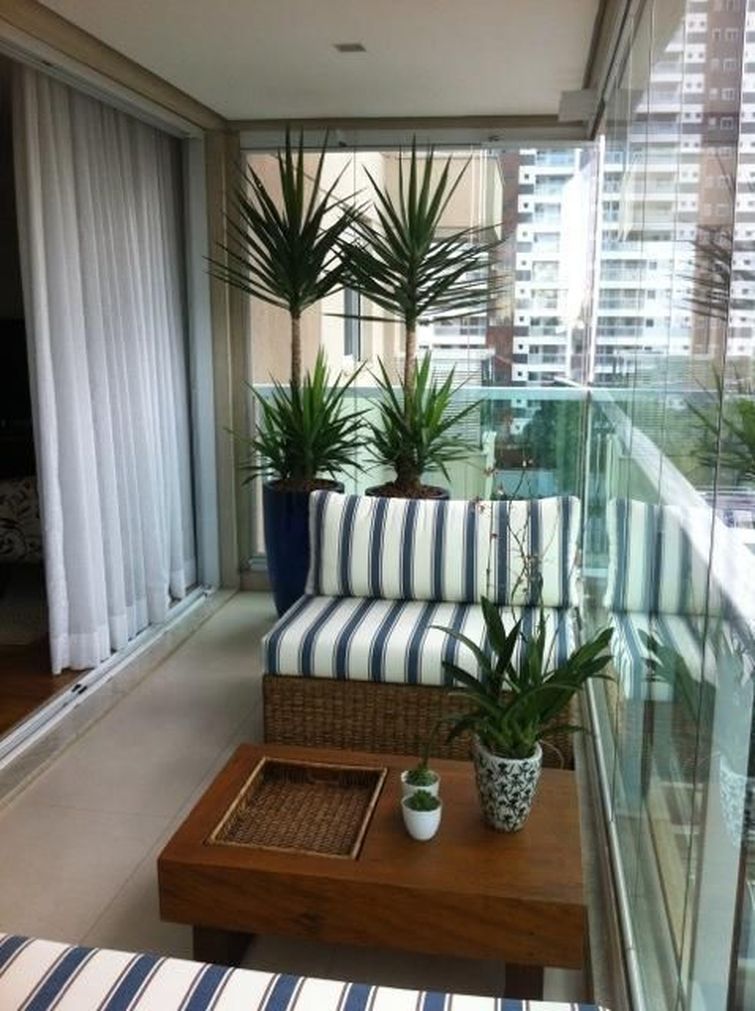
When using pot plants ,cluster pots of different sizes together to create interest or alternatively, option for a single statement plant. In larger spaces, use planter boxes. Artificial grass tiles and precious space.

When using pot plants ,cluster pots of different sizes together to create interest or alternatively, option for a single statement plant. In larger spaces, use planter boxes. Artificial grass tiles and precious space.

5. Furniture & Furnishing –

Don’t overload the place with lots of furniture.

Many pieces of furniture have been cleverly designed to save you space.

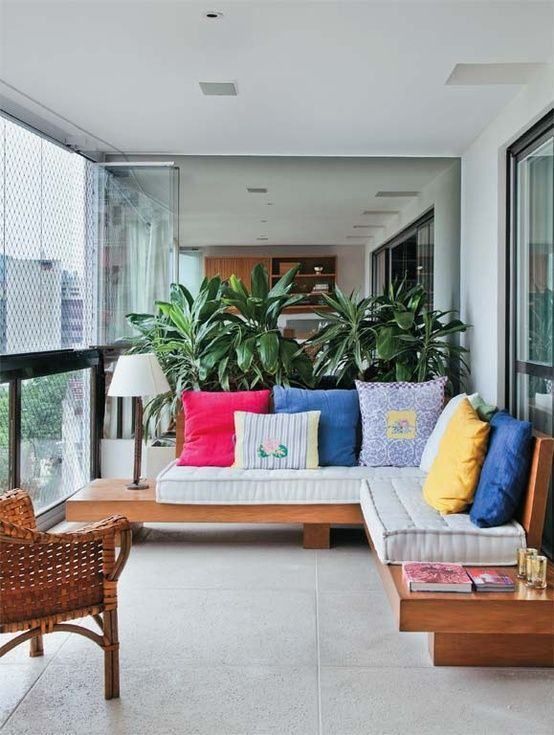
Don’t be afraid to be adventurous when styling an outdoor space. Through contrasting textures, use of fabrics and cushions, the space is incredibly inviting.

A corner table which can also be used a handy storage space. A cushion storage box will keep your cushions nice and dry and also come in very handy as extra seating for any unexpected visitors.