BUILDING MATERIAL – Timber Structure , Sawing Types , Common Market Form & Size – Part 2

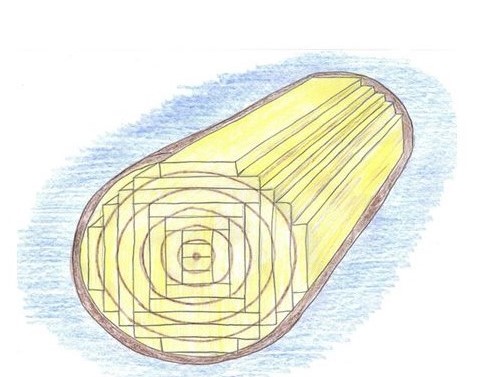
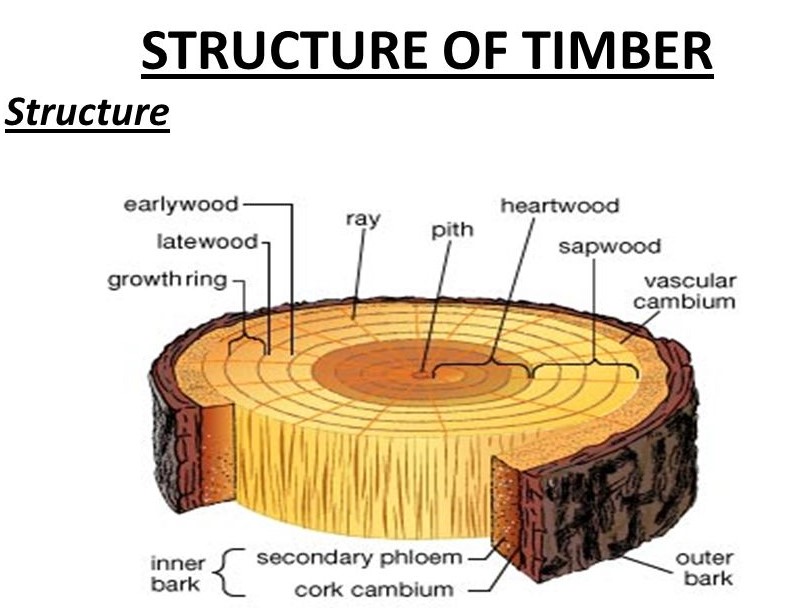
Structure of Timber :

1)Pith : Inner most part having soft tissues near about the center of log of a timber.

2) Heart Wood : Inner Part of Log of a tree surrounding the pith is called Heart.

3) Sap Wood : Outer Part of log of a tree surrounding heard wood & upto the bark which contains living cells Is called Sapwood.

4) Cambium Layer : Layer of liquid material deposited below the bark & outside the sap wood in the log called Cambium Layer.
STRUCTURE OF TIMBER Structure

5) Inner Bark or Bast : The inner skin surrounding The Cambium Layer. This skin feed & covers the Cambium Layer.
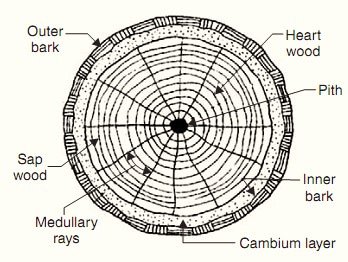
6) Outer bark : The covering outside the log of a tree.

7) Annual Ring : Concentric innumerable rings in the log of a timber,Indicating its growth are called Annual Rings.

8) Medullary Rays : Horizontal thin fibrous tissues which extended radially from the cambium layer towards the core or from the pith towards the bark.

Types / Sawing of Timber :
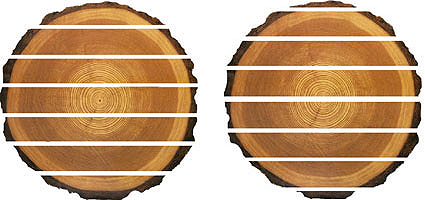
Ordinary or Slab Sawing
Tangential Sawing
  1. Ordinary or Slab Sawing : Most economical method As the wastage of timer & cost of sawing minimum.Cuts are made into the log of wood according to the required thickness, not necessarily tangential to the annual rings.
  2. Tangential Sawing : The board & planks are sawn out of wood tangentially to the annual rings. Economical due to less wastage &involves less Labor do not suit for heavy works as for flooring.
  3. Quarter Sawing : Log cut into four quarters. These quarters have their flat faces essentially radial.Cuttings the annual rings at angles not less than 45Degree. It requires more labour & involve more Wastage.
  4. Radial or Rift Sawing : Log cut out of quarter logs Parallel to the medullary rays & perpendicular to the annual rings. Uneconomical method. It produces timer with end grains which are sometimes known as “Silver Grains” by sawing parallel to the medullary rays.Used for High Class decoration & joinery work.
  5. Combination Sawing : Log is converted by the Combination of two or three methods.Advantages of Ordinary & Radial Sawing.

Common Markets Forms & Sizes of Timber :

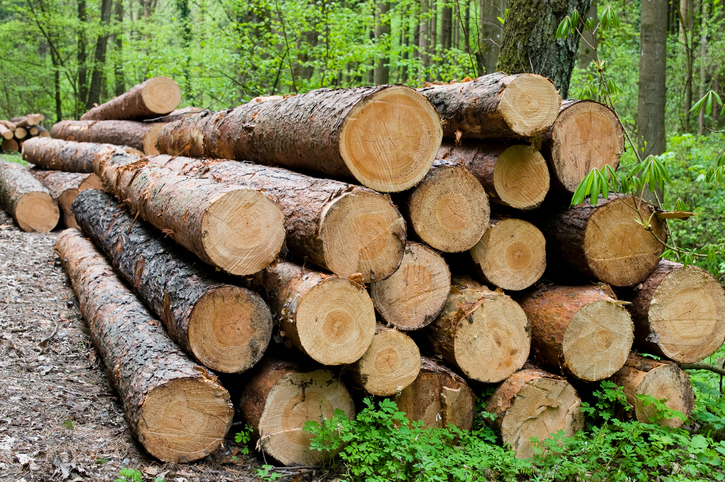
A) Log : Stem or trunk of a tree which is felled.
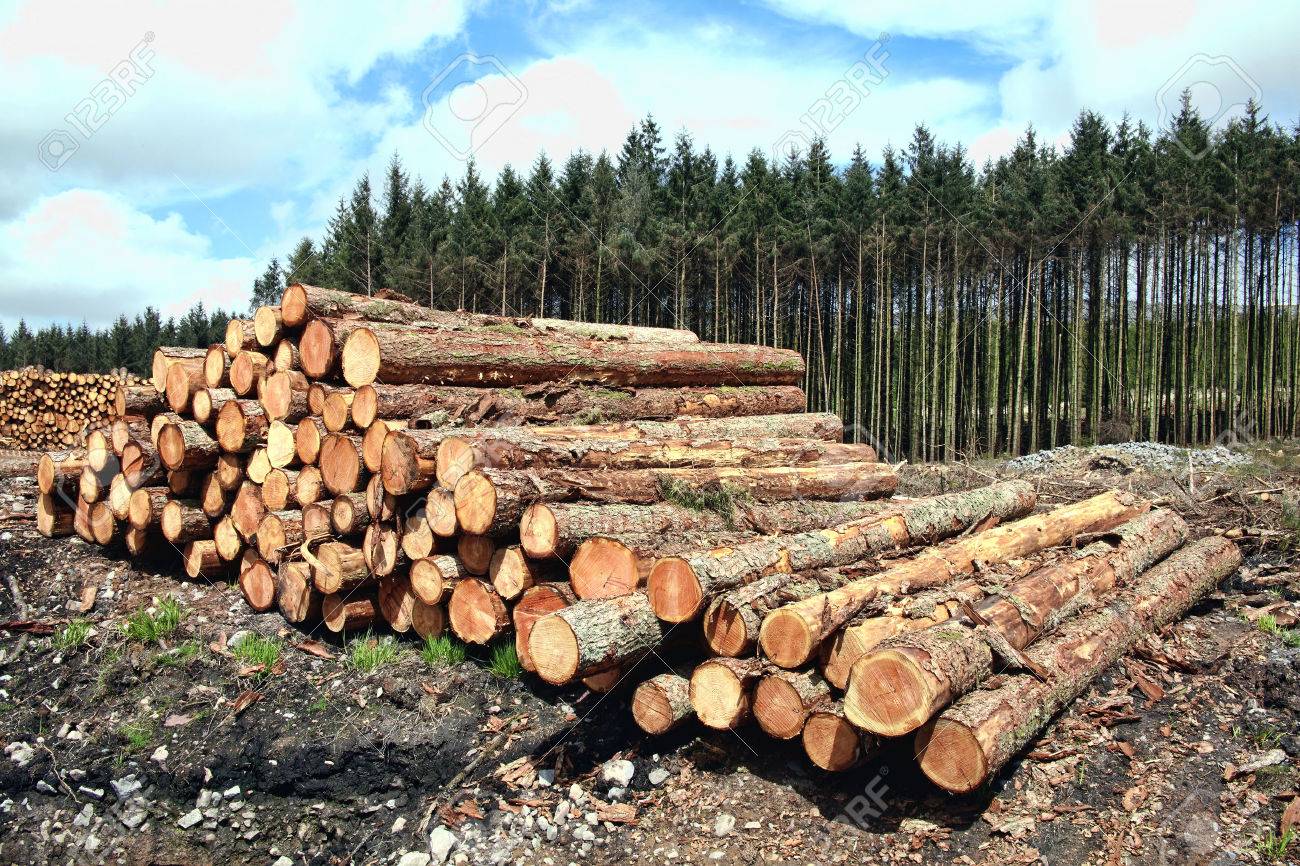
Log of Timber

B) Baulk : A piece of sawn timber, cross sectional Dimension of 50mm in one direction & 200mm in other.

C) Bole : The main stem of a tree

D) Bolt : A Short log 1.25m or less in length.

E) Billet : Short length of a thin stem or branch wood.

F) Batten : Piece of sawn timber, the cross sectional dimension of which dn’t exceed 50mm.
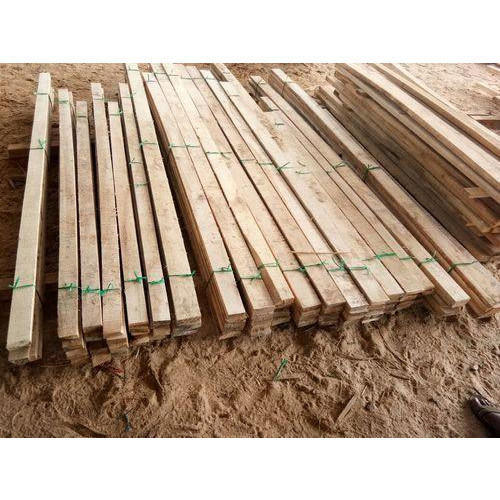
Batten of Timber

G) Plank : Thickness not exceeding 50mm & width exceeding 50mm.

h) Board : A thin plank under 50mm thick & 100mm More Width.

I) Cant : A thick piece of timber with or without squared edges.

J) Deal : A sawn piece of wood which is 50-100mm thick & 200-250mm wide.

K) Deal Wood : Light timber used for packing cases,crates.

L) Hewn timber : Timber converted to size by an axe and the end.
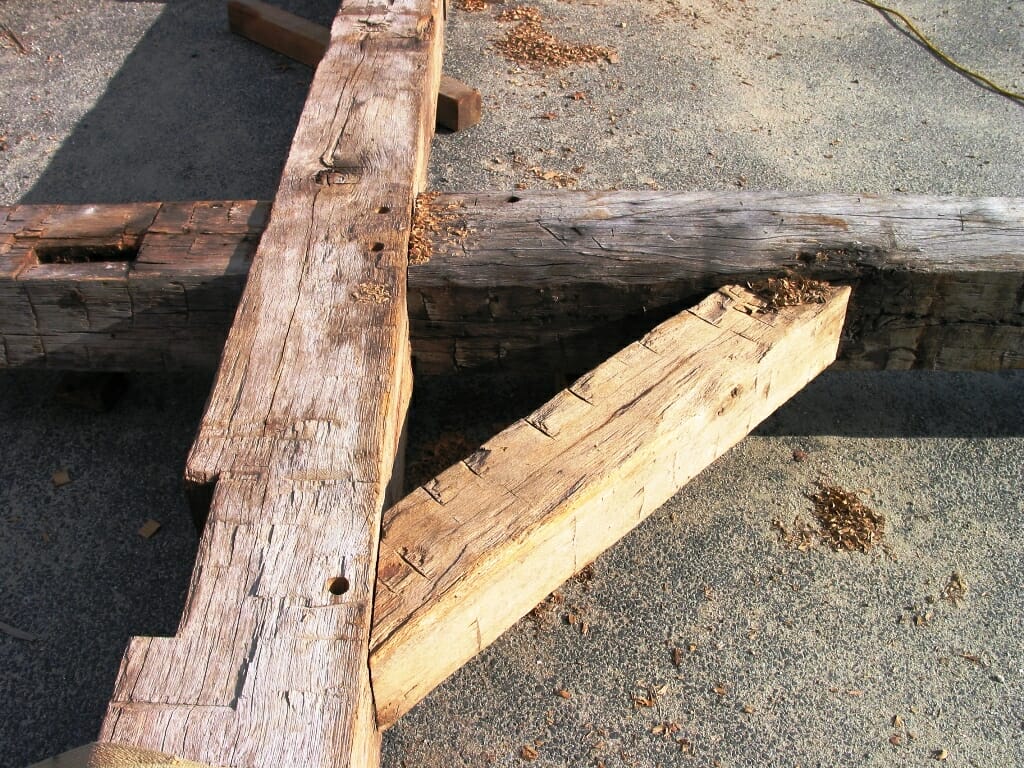
Hewn of Timber

M) Pole : A long, soild, straight trunk of a tree 100 To 300mm in dia.at breast height & gradually to the top, Of a diameter of 100mm or more.

N) Post : Timber member used in upright position in Building fencing or structural work is called a post.

Timber as a Railway Sleepers

O) Scantling : Sawn Piece , dimensions of which Exceed 50mm in both the direction bt dn’t exceed 200mm In length.

P) Slat : Wood about 185mm x 65mmx 6mm in size.

Q) Sleeper : Transverse supports under rails in a Railway track. 250mmx125mm or 200x115mm.

R) Strip : under50mm thick & less than 100mm wide.

https://www.facebook.com/ArchitectureInteriorDesignStudio/

https://www.instagram.com/tanyadecor1/

BUILDING MATERIAL – Timber Types & Classification

Timber derived from Timberian which mean to build.The wood used for building or other engineering purpose is called timber.

It is a first construction material used by a man since pre-historic ages.

Timer is a natural material. Trees provide shelter from sun and the rain.

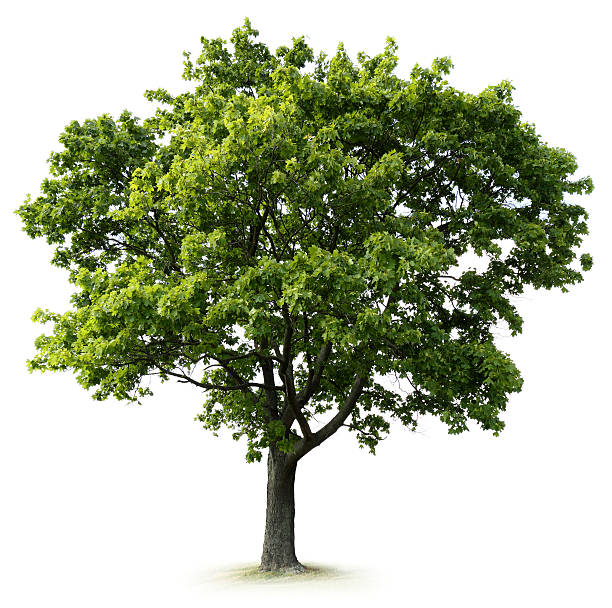
Tree: Maple Tree

Trees conserves soil moisture. It precipitate rainfall & lower temperature .A single Tree can cool the summer heat better than 20 Air conditioners.

It prevents depletion of the ozone layer of the atmosphere. It prevents soil erosion.

Trees produces oxygen and purifies the air.

Timber :

Timber

Timber obtained from trunk of a tree. There are many varieties of timber available all over the world.

Advantages :

Timber is strong than any other material. Timber can be easily worked to any size & shape. It can be jointed to required form.

Timber can used for furniture & decoration fittings. Structural connections can be easily made in timber. Timer are light in weight, quite durable.

Its resale value is good. Its non conductors of heat & sound.

Timber uses in construction

Classifications of Timber :

1)Exogenous Trees

2)Endogenous Trees

Exogenous Tress :

Trees which grow outwards and increase in bulk by the formation of successive annual rings are known as exogenous trees.

Exogenous Trees Structure

Timber which is used for building engineering works,Is Mostly obtained from exogenous trees. Examples : Deodar, Kail, Sal, Teak, Shishum, Chir etc .

Exogenous trees are further divided into following two types:-

1)Conifers or Evergreen Trees

2)Deciduous or Broad – Leaf Trees

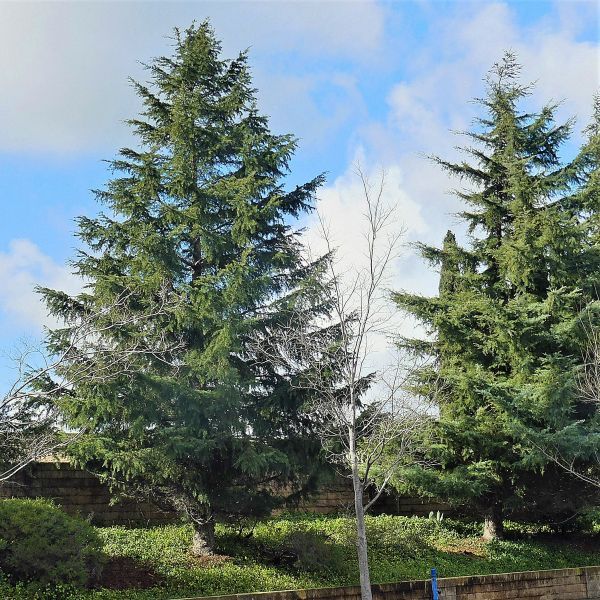
Conifers or Evergreen Trees : Soft Wood

Trees which remain evergreen & bear fruits.These trees usually yield soft wood & show distinct annual rings. They are light in color & weight.

They can easily split & are resinous. They are comparatively weak in strength. Example :Pine, Deodar, kail, Chir,walnut etc

Deodar – Conifers Tree

Deciduous or Broad Leaf Trees : Hard Wood

Trees which shed their leaves in the autumn &put on new leaves in the spring season are known as deciduous or broad leaf trees.

These trees usually yield hard wood & dark in color, Hard, close grained and strong.They are useful for important engineering works. Example :Sal, Teak, Shishum, Babul, Ash, Mahogany etc.

Deciduous or Broad Leaf Trees

Endogenous Trees :

Endogenous trees which grow end wards in a longitudinal fibrous mass are known as endogenous trees.

These trees are too flexible & aren’t suitable for engineering works.Example : Canes, Bamboos , palms etc

Endogenous Trees Structure

Comparison Between Hard Wood & Soft Wood

https://www.facebook.com/ArchitectureInteriorDesignStudio/

https://www.instagram.com/tanyadecor1/

How to Choose Color Scheme for Your Room Interior

Did you know that color psychology can affect the way you think and feel ?

Example the bright blue in a clear morning sky makes us feel alive and free; the deep purples and reds in the flowers that bloom in Spring evoke emotions of warmth, life and energy. It’s true! That why you have to more careful when you choose the colors for your room.

Decide what mood you want to convey your guest throughout your home. Relaxed, dramatic, romantic, etc. This will help guide you in terms of color saturation (how intense/bright the color is) and how much of it you use.

Choose 2 -3 of your absolute favorite colors & than choose complementary color. Create a mood board for a better picture. After That Go for Paint work , Upholstery & Furniture , soft furnishing (curtain, cushion , Rug , bed sheet etc.) , Lighting & Last choose the Statement Piece for  complete look of the Room.

Types of Color Schemes –

Monochromatic – A monochromatic color scheme is one where different shades of one color are used. For example using different shades of blue, ranging from pale to navy.

Analogous – An analogous color scheme is one where you use colors that fall next to each other on the color wheel. For example, using green and blue. The analogous color scheme refers to using three colors in a row on the color wheel. Typically, two colors will be either primary colors with the third shade being a mix of the two and a secondary color. For example, you could choose red, orange, and yellow or red, purple, and blue. The key to using this color scheme successfully is proportion. Again, the 60-30-10 Rule comes into play. 

Color Wheel

Complementary – Complementary colors are positioned opposite each other on the color wheel.  Every primary color has a complement that creates a vibrant contrast. If you like the idea of a complimentary color scheme, but are afraid it may be a little too bold for your tastes, split complimentary is a safer choice. you would first choose your base shade. Then, instead of choosing the color directly opposite of your base, you chose the two shades on either side of the opposite color.
Complementary Colors

Those two shades will provide a much needed sense of balance to the room. 

Warm – Red, orange, yellow and the colors in which they show dominance (or the colors with these as undertones).

Warm Color

Cool – Blue, green, violet and the colors in which they show dominance ( or colors with these as their undertones).

Accent colors – These are the one which are used to create the ‘pop of color’, these have to be intense and bright with an opposite undertone. Remember, with the accent color ‘less is more’, use it as minimum as possible, instead of creating small spots of this a big, bright focal point shall be ideal. This is totally an optional color, but adding this will create a nice break and thrill in your décor.
Vastu Tips For Puja Room

Create a room where you can worship /meditate is called Puja Room. Its doesn’t matter how big r small/ corner Puja room. Indian apartments are mostly crunched for the space. But if you ‘re among the lucky ones to be blessed with a separate space for meditation at home.

Puja room or prayer room is and must be one the most auspicious and sacred rooms of your home.

This is the space were stress-busters that served the purpose to connect with a higher power and keep the mind in balance.

We create a room where you get to charged with positive energy when you do meditation. That positive energy will energize our house ambiance & give peace to mind, body & Soul. We are creating a room to get charged with positive vibrations every morning and that energy will energize our environment, mind, body and soul. Our work efficiency will increase and so the progress, prosperity and peace.

This should be designed carefully with kept in mind Sun Direction as well Vastu. If It is nt designed by according to Vastu you will not feel charged.

It should be clean and well-designed.

Vastu Tips –

  1. Direction – North East Corner of the Home is the best direction for Puja Space. First Sun Rays of early morning come from these directions. East & West Are Second Best Location. South Direction isn’t for Puja Space.

Idols face may be good towards East or West direction in the Puja room. One should face towards East/North while worshiping.

2. Placement of Puja Space  – Puja room should not be above electrical appliances or gas stoves. Puja room should not be below Staircase.

Puja room walls should not touch the toilet. It is believed that the bathroom emits negative energy and this energy must not go to the Puja room. Puja room should not be opposite bathroom or toilet.

Puja room should be clean and neat avoid dirt or clutter and keep it fragrant.

3. Idols Should Not Face Each other – Don’t place idols and images on opposite walls because at the time of prayers we should not turn our back towards scared idols.

4. Distance Between Idols And Walls – Idol should not touch the wall . there is always gap between Idols & wall for flow of air and incense smoke through the room.

5. Colors In The Puja Room – White, Light Yellow or Light Blue.

Light colors reflect light thus enhancing the bright and well-lit look of a space.

The color of the curtains should somehow match with the color of the walls, i.e., the curtains can also be of light colors.

The light colors let the natural light come in, that’s why,

6. Door & window Position –

 In the Puja Room, doors and windows should be in North and East directions.

7. Aerial Idols –

Idols are considered sacred, so they should not directly come in contact with the floor. Put a table or fix a shelf for idols.

Always remember Puja room should be clean so pick a design likewise easy to clean.

 While worshiping, the legs of the idol should be at the chest level of the person worshiping depending on the position, whether standing or sitting.

8. South east Corner of the Puja –

          The Agnikund should be in the southeast direction of the worship room. The sacred offerings to the fire should be made with the face towards the east Lamp stand should be placed in the Southeast corner of the Puja room.

Balcony Design Tips

Balcony designing How Important It is –

People in metro cities live in concrete Jungles, as they dn’t have outdoor space & they have only childhood memories of growing up amid greenery. Garden Space is a luxury for most urban apartment dwellers.

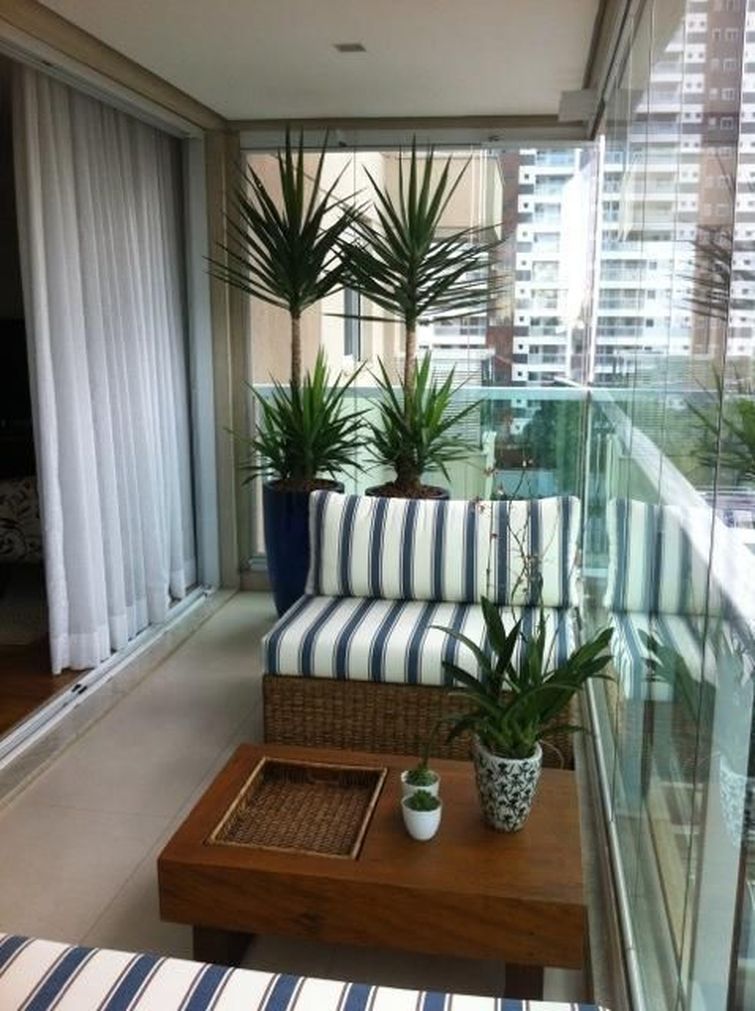
Balcony is the small little space, an unused cluttered with junk, you can still transform it into a small heaven , where you can relax and enjoy the air breeze with a cup of coffee & enjoy the sun in winter.

No matter how big or small, it is very unique part of your house. Balcony Design is to transforming a neglected space and to converted it into something beautiful. The design of balcony in such that its reflect the our life style.

Are you too struggling to find right design for your balcony?

Balcony can be used of various purposes like Outdoor sitting space, plantation, small study area & utility purpose etc.

Design element for Balcony including shade, stylish furnishing & furniture, screening for privacy , Flooring & Plants for softness also pay attention to detail.

These are following few Tips & Trick while designing you Balcony.

  1. Creating Indoor/ Outdoor Living – Extension of your room

The interior of the home as well as Balcony must be designed that they can complement each other & gives a stunning view. The balcony can be small but the every inch of space should be used properly.

The interior of the home as well as Balcony must be designed that they can complement each other & gives a stunning view. The balcony can be small but the every inch of space should be used properly.

2. Selection of Plants & greenery for your Balcony –

Nature has always been great company, adds good vibe, hence adding some plants and flowers is really important in your Balcony, They complement the design of your Balcony.

The Balcony design should be according to the direction & duration of sunlight. Selection of Plant in the Balcony depend upon varies factor such as your life style & need watering ( for example some plant need water once a week & some plant requirement much more water than other plant who’s requirement is less ).

You can give Statement look of your wall by designing of Vertical garden & a boring wall can be turn be interesting simply delicious garden.

3. For Privacy –

Privacy is a key reason why many balconies are underutilized. For privacy using timber as a screen , ensure it is slatted so that breeze and light can still pass through.

Laser cut screening GRC or Metal &  create a barrier using plant such as tall grasses and hedges if you are in a windy position, screens can also double as a barrier from the elements.

A wicker or bamboo screen will give your Balcony or terrace a more natural appearance.

An artificial hedge also u can use these hedge comes in the form of mats, rolls or lattices , can be easily installed.

4. Add Interest Element –

You can add a sculptural element to the space.

When using pot plants ,cluster pots of different sizes together to create interest or alternatively, option for a single statement plant. In larger spaces, use planter boxes. Artificial grass tiles and precious space.

When using pot plants ,cluster pots of different sizes together to create interest or alternatively, option for a single statement plant. In larger spaces, use planter boxes. Artificial grass tiles and precious space.

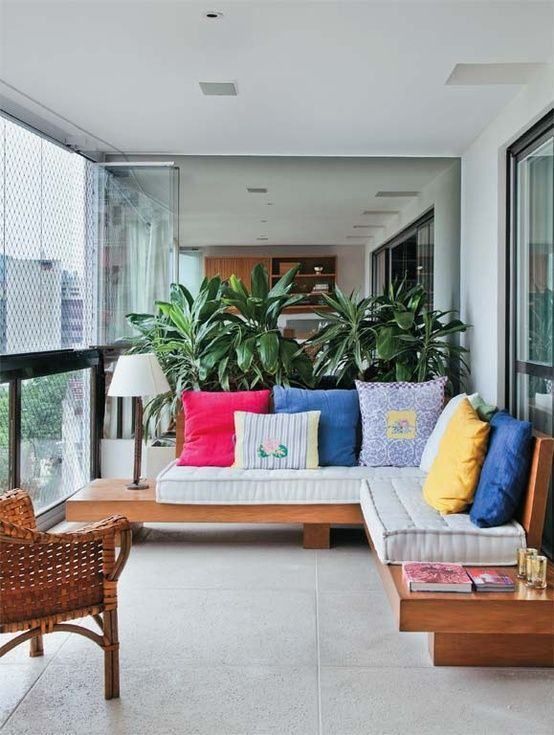
5. Furniture & Furnishing –

Don’t overload the place with lots of furniture.

Many pieces of furniture have been cleverly designed to save you space.

Don’t be afraid to be adventurous when styling an outdoor space. Through contrasting textures, use of fabrics and cushions, the space is incredibly inviting.

A corner table which can also be used a handy storage space. A cushion storage box will keep your cushions nice and dry and also come in very handy as extra seating for any unexpected visitors.