BUILDING MATERIAL – Different Types of Trees

BABUL / BABBID / KIKKAR/ ACACIA NILOTICA :

Characteristics :

1)It provided hard wood which is close grained, strong, hard, tough & elastic.

2)Its durability is low.

3)It is pale red inclining to brown in color.

4) It takes good polish.

5) It is moderate to air seasoning but hard to work.

6) It’s average weight is 785kg/m3.

Uses :

1)It is used for constructional purposes including building construction, house posts, beam, bridges,piles, poles & railway sleepers.

2)For Agricultural implements and tool handles.

3)For turnery articles and toys.

4) For bodies of trucks, carts, railway coaches, wagons etc.

5) For cane crushers , tent pegs, well curbs etc.

6) For fuel, being excellent for charcoal, fire wood.

SISSOO / SHISHAM / DALBERGIA SISSOO :

Characteristics :

1)It provided hard wood which is well marked coarse grained, strong, hard, tough & elastic.

2)Its durability is moderate.

3)It is dark brown in color.

4) It takes good finish & good polish.

5) It is moderate to air seasoning but hard to work.

6) It’s average weight is 785kg/m3.

Uses :

1)It is used for constructional purposes including building construction, house posts, beam, bridges,piles, poles & railway sleepers.

2)For furniture and cabinet making.

3)For agricultural implements and tool handles.

4)For turnery articles and toys.

5) For veneers and plywood.

6) For sports goods, well curbs, and as fuel wood.

Locality in which grown or formed :

It is a exogenous tress variety.It grows rapidly in every soil , specially along roads & canals.It grows in north & east zone of India.

TEAK /SAGOON/SHEGM/SAGWAN / TECTONA GRANDIS :

Characteristics : 1)It provided hard wood which has straight ,well Compacted grains ,strong, tough & elastic.

2)Its durability is high as it contains mineral substances and oil which resist the attack of fungi & other insects.

3)It is deeply yellow to dark brown in color.

4) It takes good finish & good polish.

5) It is moderate to air seasoning but easy to work.

6) It’s average weight is 640kg/m3.

7) It gives fragrance when freshly cut.

Uses :

1)It is used for constructional purposes including building construction, house posts, beam, bridges,piles, poles & railway sleepers.

2)For furniture and cabinet making.

3)For heavy packing cases.

4)For turnery articles and toys.

5) For veneers and plywood.

6) For railway carriages, bus bodies, ship building and other fine works.

Locality in which grown or formed :

It is a exogenous tress variety.It is available in all zones except North zone of India.

SAL / SHOREA ROBUSTA :

Characteristics :

1)It provided hard wood which is close grained, extremely strong , hard , tough & elastic.

2)It is heavy durable, resistant to fungi white ants etc.

3)It is dark brown in color & heavy in weight.

4) It does not takes good polish & hard to work.

5) It is highly refractory to air seasoning.

6) It’s average weight is 865kg/m3.

Uses :

1)It is used for constructional purposes including building construction, house posts, beam, bridges, piles, poles & railway sleepers.

Locality in which grown or formed :

It is a exogenous tress variety.It is available in North  East & central zone of India.

JAMAN / JAMMUN / SYZYGIUM CUMINI :

Characteristics :

1)It provides strong, close grained , hard tough.

2)It is heavy durable, resistant to fungi white antS etc.

3)Its durability is moderate.

4) It is pinkish to brown in color.

4) It does not takes good polish & easy to work.

5) It is highly refractory to air seasoning.

6) It’s average weight is 785kg/m3.

Uses :

1)It is used for constructional purposes including building construction, house posts, beam, bridges,piles, poles & railway sleepers.

2) Heavy Packing case.

3) For veneer Purpose.

4)As fuel wood.

Locality in which grown or formed :

It is a exogenous tress variety.It is available in North East , central , West & South zone of India.

MANGO / ASM :

Characteristics :

1)It is coarse & open grained , interior quality wood, moderately strong.

2)It is durability is low & easily attacked by white ants etc.

3) It is deep grey in color.

4) It is easy to work & keep its shape well.

5) It is low refractory to air seasoning , liable to strain if not dried quickly.

6) It’s average weight is 690kg/m3.

Uses :

1)It is used for constructional purposes including building construction, house posts, beam, bridges,piles, poles & railway sleepers.

2) Light & Heavy Packing case.

3) For veneer & Plywood Purpose.

4)As fuel wood.

5)For furniture & cabinets Making.

Locality in which grown or formed :

It is a exogenous tress variety.It is available in North, East , central , West & South zone of India.

TOON / TUN / REDCEDAR / TOONA SINENSIS :

Characteristics :

1)It is light in weight & close grained and not so Strong.

2)It is durability is low.

3) It is light brown to dark brown in color.

4) It is easy to work & take better polish.

5) It is moderately refractory to air seasoning , & retains its shape.

6) It’s average weight is 690kg/m3.

Uses :

1)It is used for constructional purposes including building construction, house posts, beam, bridges, piles, poles & railway sleepers.

2) Light & Heavy Packing case.

3) For veneer & Plywood Purpose.

4)For turnery articles & toys.

5)For furniture & cabinets Making.

Locality in which grown or formed :

It is a exogenous tress variety. It is available in North, East , central , West & South zone of India.

SANDAL WOOD / CHANDAN :

Characteristics :

1)It is strong & straight grained wood.

2)It is durability is moderate.

3) It is light brown to brownish in color.

4) It is easy to work & take better polish.

5) It is low refractory to air seasoning.

6) It’s average weight is 915kg/m3.

Uses :

1)It is used for furniture & decorative purpose.

2)For turnery articles & toys.

Locality in which grown or formed :

It is a exogenous tress / Non – Coniferous variety. It is available in West & South zone of India.

DEODAR / KELO / DIAR / CEDAR TREE :

Characteristics :

1)It is strong, tough , close & well marked grained  wood.

2)It is durability is high.

3) It is light in color.

4) It is easy to work , planked & take good polish.

5) It is low refractory to air seasoning.

6) It’s average weight is 545kg/m3.

Uses :

1)It is used for furniture & cabinet making.

2)For light & heavy packing cases.

3) Construction purpose as in the case of Babul.

Locality in which grown or formed :

It is a exogenous tress / coniferous variety.It is available in North zone of India.

CHIR / CHIL / PINE/ PINUS ROXBURGHII  :

Characteristics :

1)It is strong, tough , coarse grained, but inferior than deodar wood.

2)It is durability is low.

3) It is light reddish brown in color.

4) It is easy to work , but liable to cracking against  rapid drying.

5) It is low refractory to air seasoning.

6) It’s average weight is 575kg/m3.

Uses :

1)It is used for Construction purpose as in the case of Babul.

2)For light packing cases.

3) For furniture & cabinet Making

Locality in which grown or formed :

It is a exogenous tress / coniferous variety.It is available in North zone of India.

KAIL / PINUS WALLICHIANA :

Characteristics :

1)It is strong, hard, tough , close grained.

2)It is durability is low.

3) It is light in color.

4) It is easy to work and finish.

5) It is low refractory to air seasoning.

6) It’s average weight is 515kg/m3.

Uses :

1)It is used for Construction purpose as in the case of Babul.

2)For light packing cases.

3) For furniture & cabinet Making

Locality in which grown or formed :

It is a exogenous tress / coniferous variety. It is available in North zone of India.

https://www.facebook.com/ArchitectureInteriorDesignStudio/

BUILDING MATERIAL – DISEASES & DEFECTS OF TIMBER ! REQUIREMENT OF TIMBER- Part 4

Decay of Diseases Of Timber :

The Disintegration and turning to powder of timber Tissues is known as Decay or Disease of Timber. When the timber , without proper seasoning , Is placed in a position where there is no circulation of air, The disintegration of wood tissues is caused by fungi or other micro – organism. Dampness, alternate wet and dry conditions and old age accelerate decay of timber.

Classification of Diseases Of Timber :

1)Dry Rot :

The turning of timber tissues to almost a dry powder by fungi is called dry rot.There are many kind of fungi (means mushroom or any kind of spongy plant)which gain admittance into the Wood by means of pores, which breed in wood cells And spread minute thread like growth.

Favorable Condition of dry rots :

Sufficient temperature, Dampness , lack of free air and adequate food material.The fungus feed upon the wood and eats the wood Tissues, thus penetrating the wood fibers in all directions.

The wood is reduces to almost a dry powdery form by eating away the interior fibred of wood.The wood becomes soft like spongy mass usually grey in color.Sufficient temperature, Dampness , lack of free air and adequate food material.

Prevention of dry rots :

The timber which is well seasoned and free from sap, should be used because mostly sapwood is attacked by fungus.

It should be used at a place where there is free circulation and access of fresh air.

Remedy of dry rots:

The infected part of timber should be burnt or cut away & remaining portion should be painted with a solution of copper sulphate or with any other suitable preservative.

The wood cells which form the food of the fungi, should be impregnated with poison to control further growth of fungi.

The high temperature of seasoning kiln, will also Help In killing the fungi & expelling the moisture.

2) Wet Rots :

The disintegration of tissues of the timber due to alternate wetting & drying is called wet rot.Common found in a Living tree. The attack takes place through wounds in the bark by the access of water you can say high % of moisture.The decomposition of the effective part results in converting the wood fibers into a greyish brown powder.

Prevention of wet rots : 

All timbers for exterior or underground work should be first properly seasoned and then coated with tar or some paint to keep out the dampness.

Remedy of  wet rots :

for treating wet rot is by using a suitable preservative.

3) Insect Effect :

Such as termites (white ants), beetles, larva & marine borers cause decay of timber.They live in colonies. They build up mud tunnels to keep their movements covered & eating into the wood under the surface.

Prevention of wet rots :

The most effective way of controlling termites is To create damp proof conditions by using cement Concrete & cement mortar in joints so that termites may not work their way through the joints.

Well seasoned wood should be used and also protected from outside by sun & rain by a suitable cover to prevent it from insect attack.

Remedy :

The marine borers attack can be controlled by Providing copper bottom to wood which is to come in touch with water.

Causes of Decay Of Timber :

1)Presence of sap & moisture due to improper seasoning.

2) Stacking timber or using it in a position where there is no free circulation and access of fresh air.

3) Using timber at a place where it is subjected to alternate wetting and drying conditions.

4)Using Timer in structural work without the application of paint or any other suitable preservative on a seasoned wood, specially for underground work Such as fence post.

5) Applying protective coat of paint to unseasoned wood will induce decay by closing he outside pores.

6) Using timber where it is subjected to dampness.

Defects Of Timber :

1)Natural Defect developed during the growth of Tree

2) Defects occurring after a tree is felled.

Natural Defects :

1)Shakes : The partial or complete separations between adjoining layers of tissues are called shakes.

Shakes commonly formed in Log of trees which are allowed to stand even after they attain maturity and indicate old age.They lower the resistance to shear.

2) Heart Shakes :

The radial ruptures in annual rings or splits radiating from the heart of wood & extending towards the sapwood are called Heart Shakes & shake occurring at or near the pith and giving the appearance of a star on end of a timber log piece is called Star Shake.

These shakes are caused by quick drying of central part of the tree, having attained maturity. Felled tree nearing maturity.

3) Radial Shakes :

The radial splits which extend from the bark towards the pith are called Radial Shakes.These shakes are wider at outer ends and get narrower towards the pith. They are caused by shrinkage of outer tissues drying faster than the inner ones. Such defect usually arise during sudden seasoning of timber log and by excessive heat of the sun or server cold in forests.

4) Cup Shakes :

The opening along the growth rings are called cup shakes or ring shakes.

When the rupture of timber extends only a part round, it is called a cup shake and when whole way round, it is called a ring shake.

This defect is due to the sudden increase of moisture supplied by the roots of a tree and than quick drying.

B) Rindgall :

The curved swelling resulted from the growth of sap wood layers on wound, left by a falling branch or cut off branch in an irregular manner is called rindgall.

The new growth does not unite properly with the old wood and leaves a carity where decaying action may set in the form of rindgall.

C) Knots :

The dark hard pieces indicating places from where branches of a tree have been cut off or broken are called knots.

When the formation of knots if free from decay and such other defects and is firmly intact with the surrounding wood, it is called a live knot or sound knot.

A knot which is not held firmly in place is called a dead knot or loose knot.

Knots are source of weakness as they break the continuity of wood fibers.

A wood having a live knot can be used for engineering purpose.However, it is not safe to use a wood having dead knots.

Knots make the working of wood difficult.

Common knots are :

Round Knot, Oval Knot, Spike Knot, Grouped Knot & Pencil Knot.

D) Twisted Fibers :

The defect due to the fibers of tree which get twisted when young, by the force of wind is called Twisted FIBRES.

Twisted fiber make the wood weak & is only suitable for fuel purposes.Poles in unsawn condition where twisted fibers will give extra strength.

E) Upsets :

The defect caused by crushing or by injury in wood fibers are known as Upsets.

They occur usually during the growth of a tree.This makes the wood weak & unfit for any important work.

F)Burl, Burr or Excrescence :

The growth of a large excrescence bulge which is formed on the trunk or branch of a tree due to certain injury inflicted when the tree is young is called Burl, Burr or excrescence.

G)Coarse grains :

The widening of annual rings due to rapid growth of certain trees is called coarse grains.

The wood having coarse grains is weak in strength and durability.

Defects Occurring after the Tree Felled :

If the seasoning of the freshly felled logs of wood is not properly carried out, several defects creep in.

1)Case Hardening :

The different layers of wood are under stress. During Klin seasoning, the outer side of timber gets hard while the inner core remains still wet due to rapid surface drying. This type of defect is known as case hardening.

2) Honey Combing :

This defects is due to separation of the tissues in the interior of timber due to drying stresses, caused by incorrect kiln seasoning as the interior wood dries earlier than the external surface.

3) Collapse :

The defect is due to the corrugates appearance of timber , caused due to excessive and uneven shrinkage during drying.

4)Foxiness :

This defect is due to yellowish or reddish stains , caused by over-maturity and lack of ventilation during storage of timber.

5)Twisting & Bowing :

If the unevenly dried timbers are subsequently sawn into smaller sections , some of the stresses are released and defects such as twisting, cupping, bowing & splitting appear distinctly in them.

a)Twist : It means a spiral distortion.

b) Cup :

A curvature in a piece of timber across its width in known as Cup.

C)Bow :

A curvature in a piece of timber along the direction of its length.

D) End Split :

A split of end of a log or a piece of timber.

Requirement of Timber :

1)It should be easily & cheaply available.

2)It should allow coat of paints & polish etc.

3)It should be highly penetrative.

4)It should be permanent nature and not to be washed away by water or spoiled by heat, light etc.

5)It should be extremely poisonous, even in small doses, to fungi & insects.

6)It should be allow decorative treatment on timber after being applied over timber surface.

7) It should be non Inflammable.

8) It should after high resistance to the moisture & dampness.

9) It should not reduce the strength of the timber & should be non –corrosive to metal in contact.

10)It should not catch fire easily.

11)It should not give bad smell and not be injurious to workmen and animals.

https://www.facebook.com/ArchitectureInteriorDesignStudio/

Building Material – SEASONING OF TIMBER

The process of drying timer(removing moisture or sap, Present in a freshly felled tree, under more or less controlled conditions timber is called Seasoning of Timber.

Seasoning is the first step in the efficient utilization of timber.Tree contain a large quantity of moisture roughly From 100% to 200%, based on dry weight of wood.A well seasoned piece  of wood may contain about 10% to 12 %  moisture.

Purpose Of Seasoning of Timber :

To minimize the tendency to shrink, warp & split. To reduce the weight for transport purposes , Handling and thereby reduction in cost. To increase strength, durability and electrical resistance. To improve the wood working qualities in timber including gluing, Painting and polishing. To make it capable to a  certain degree for protection from attack by insects and fungus.To make it fit for effective preservation treatment, otherwise the protective coat will close the outside pores and induce decay on the timber member.

Classification of Seasoning of Timber :

A)Prevention of drying of log:

The drying of the log should be induced by storing Them under water , which is incorrectly known as water seasoning.

b) End coating for preventing Splitting in Wood :

This can be prevented or minimized by coating the ends of logs and thick sections of all timbers with some kind of moisture proof substance , upto a distance of 80mm from the ends.

Some of the effective composition for end coating are given below :

1)Thick coat tar or bituminous paint.

2)Rousin and Lamp Black melted, mixed & applied hot.

3)Hardened Gloss Oil.

4) Paraffin Wax.

5) Molasses and lime (3:1).

Methods of Seasoning of Timber :

1)Air Reasoning or Natural Seasoning :

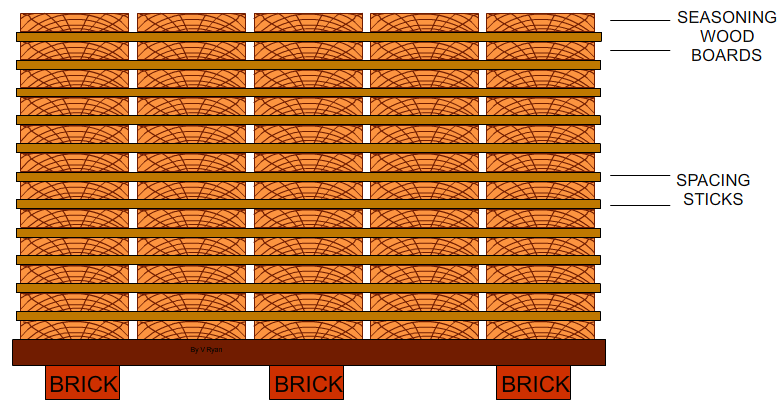
Provide free circulation of air so as to allow moisture to evaporate.This method consists in stacking the sawn timber in a dry place, should be made 300 to 450mm above ground level.

Long beam of strong timber, having cross section 100x 100mm, should be placed above the floor to serve as frame work for the stacking of timber.Air Seasoning is a slow process. Time Period depend Upon the size & type of timber, and season variations of climate.

a)Railway Sleepers :

The one and nine method is suitable for moderately heavy timber. The close crib method gives slower seasoning as it reduces the air circulation.This is recommended for stacking sleepers of refractory timber hot & dry localities. Containing about 100 sleepers

but center to center distance of crossers shall not exceed 1.5m.

B) Poles :

Poles should be stacked either in closed heaps or with  crossers.The center to center distance of crossers should not exceed 3m.

“Open Crip Method “ in which case, the alternative layers of poles are at right angle to each other ,leaving a space more than 8cm between adjacent pole in the layer.

The convenient height is kept 3m. The center to center distance is kept 1.5m.

C) Bamboos :

These should be stacked in close heaps on foundation to any convenient height.

D) Scantlings and Squares:

Stacked should be Crossers 50mm x40mm in cross section, which are kept 2.5 to 3m apart.The height of stack may be kept upto 3m.

E) Planks :

Stacking of planks should be thickness And cross section 40x25mm for planks upto 50mm Thickness. The center to center distance of crossers in each layer should be 60cm for planks upto 50mm thickness.

Advantage :

1)Simple & Economical method. ● 2)It does not require much skill and attention in the process of seasoning.

3)Slow Process, the chance of seasoning defects in the timber are comparatively less.

Disadvantage :

1)Slow Process.

2)Large Space required for stacking timber.

3)More Capital investment is required which is otherwise blocked till the seasoning is complete.

4)The moisture contents cannot be reduced less than 15 to 18%. So timber ,seasoned by this method cannot used on certain jobs for which the moisture contents required is less.

5) The timber can easily attacked by insects and fungi due to long period of seasoning even under favorable conditions.

Klin or Artificial Seasoning :

Seasoning of timber in a Klin. It is a quick method of seasoning. The moisture

content by this method can be reduced to the extent of 8 to 12 % and timber can be used in a short time and according to the climate conditions of the locality.

Construction of klin :

It is usually a masonry chamber equipped with arrangement for heating , humidifying and circulating air in the klin.

Construction of klin :

Steam is generally used for heating & humidifying the air in modern klins through furnace gases are also used for supplying  heat.It is also provided with propeller fans inside the chamber for rapid circulations of air.

Kiln seasoning

Method :

The stack of timber is made as for air seasoning and the trolley containing stacked wood is driven inside kiln and the doors are closed tightly .

A boiler for heating and power for driving the fans are also used steam is injected through the steam Pipes in the chamber while the heating pipes are kept At low temperature.Full Humidity is maintained by the steam and evaporation from the surface of the timber members is prevented in spite of the heat which gradually reaches inside the timber members.

This process is also known as desiccating.

Proper circulation of hot air is maintained by driving the fans.

Started at a comparatively low temperature & higher Humidity. Conditions Gradually when temperature of air inside the kiln is fairly high and humidity is low or reduced.

Special instrument such as moisture meter etc. are used for testing some pieces of wood periodically to check the per moisture content.The period of kiln seasoning is also variable Accordingly To thickness and species of timber (4 to30days for 25mm thick planks).

Advantage :

1)Shortest time under controlled process. ● 2)The wood can be used immediately as and when required.

3)It renders the timber less liable to shrinkage.

4) It renders the timber les liable to be attacked by insects and fungi.

5) Moisture content reduce as per requirement.

Disadvantage :

1)It is a costlier method through space required is less.

2) Skilled labour is required.

3)Being a quick process of drying, a continuous Attention and watch is required, otherwise the Timber Is liable to seasoning defects such as end splits, Surface cracks, warping , internal cracks etc.

https://www.facebook.com/ArchitectureInteriorDesignStudio/

BUILDING MATERIAL – Timber Structure , Sawing Types , Common Market Form & Size – Part 2

Structure of Timber :

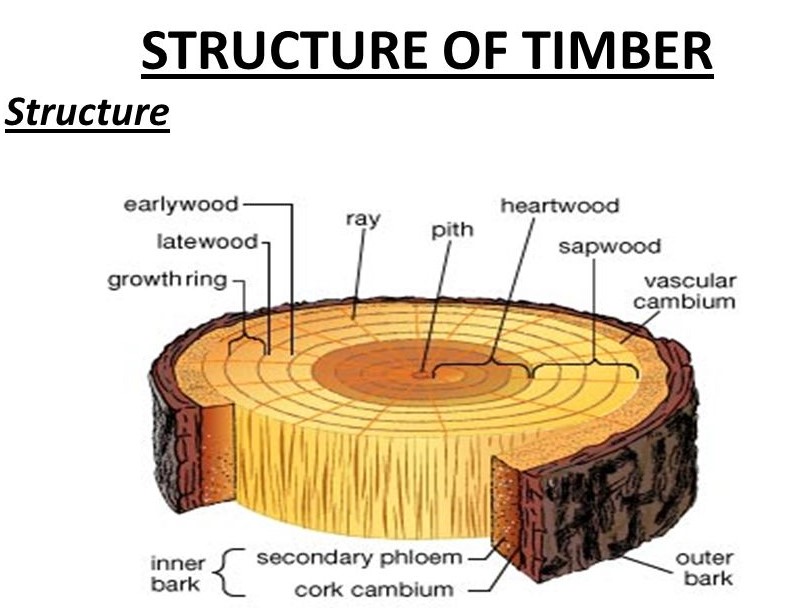
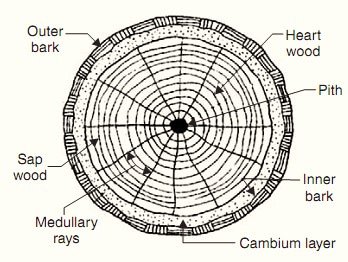
1)Pith : Inner most part having soft tissues near about the center of log of a timber.

2) Heart Wood : Inner Part of Log of a tree surrounding the pith is called Heart.

3) Sap Wood : Outer Part of log of a tree surrounding heard wood & upto the bark which contains living cells Is called Sapwood.

4) Cambium Layer : Layer of liquid material deposited below the bark & outside the sap wood in the log called Cambium Layer.

STRUCTURE OF TIMBER Structure

5) Inner Bark or Bast : The inner skin surrounding The Cambium Layer. This skin feed & covers the Cambium Layer.

6) Outer bark : The covering outside the log of a tree.

7) Annual Ring : Concentric innumerable rings in the log of a timber,Indicating its growth are called Annual Rings.

8) Medullary Rays : Horizontal thin fibrous tissues which extended radially from the cambium layer towards the core or from the pith towards the bark.

Types / Sawing of Timber :

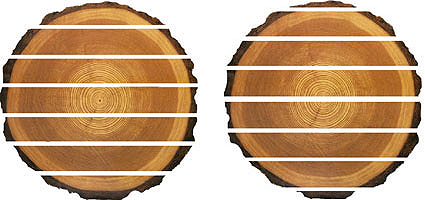
Ordinary or Slab Sawing
Tangential Sawing
  1. Ordinary or Slab Sawing : Most economical method As the wastage of timer & cost of sawing minimum.Cuts are made into the log of wood according to the required thickness, not necessarily tangential to the annual rings.
  2. Tangential Sawing : The board & planks are sawn out of wood tangentially to the annual rings. Economical due to less wastage &involves less Labor do not suit for heavy works as for flooring.
  3. Quarter Sawing : Log cut into four quarters. These quarters have their flat faces essentially radial.Cuttings the annual rings at angles not less than 45Degree. It requires more labour & involve more Wastage.
  4. Radial or Rift Sawing : Log cut out of quarter logs Parallel to the medullary rays & perpendicular to the annual rings. Uneconomical method. It produces timer with end grains which are sometimes known as “Silver Grains” by sawing parallel to the medullary rays.Used for High Class decoration & joinery work.
  5. Combination Sawing : Log is converted by the Combination of two or three methods.Advantages of Ordinary & Radial Sawing.

Common Markets Forms & Sizes of Timber :

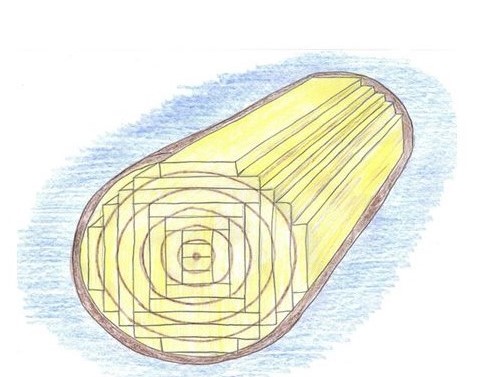
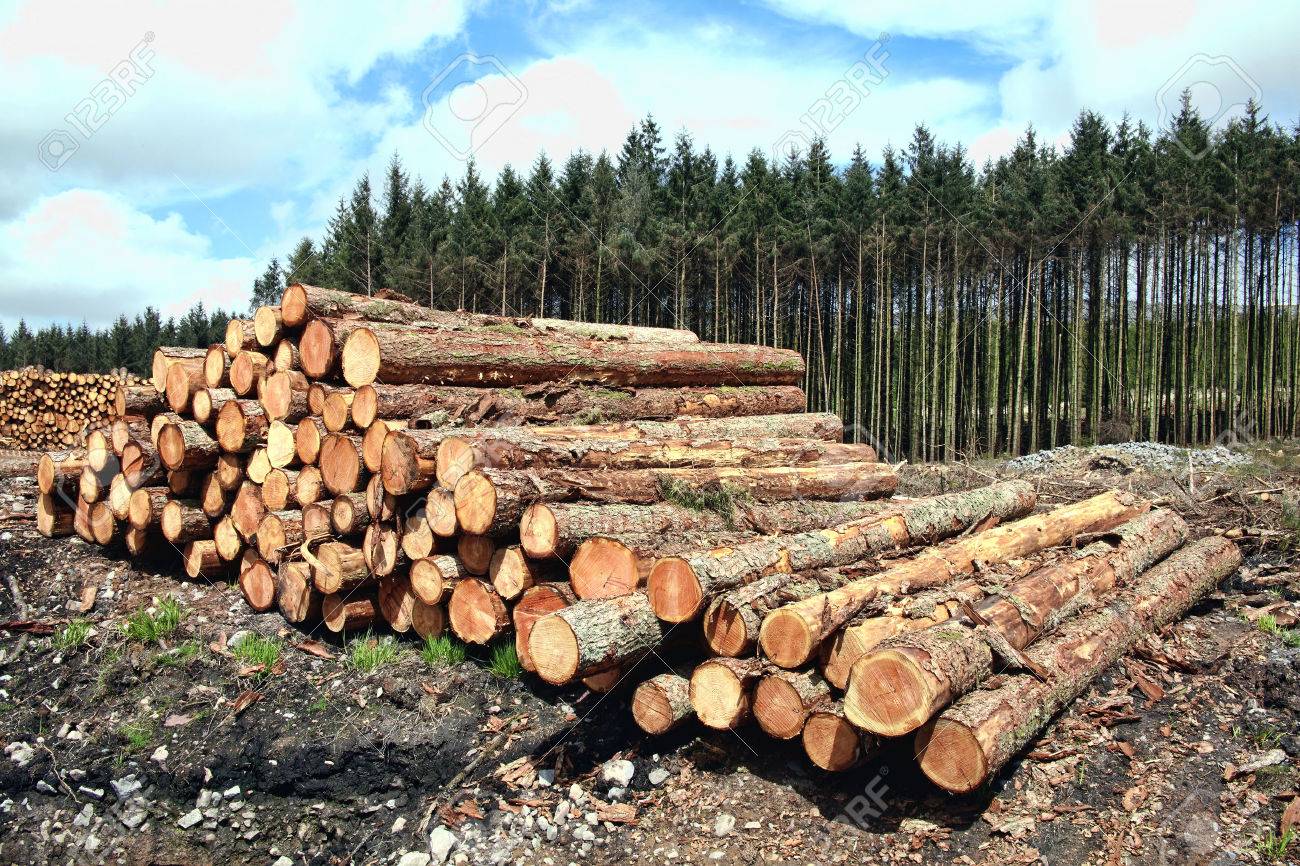
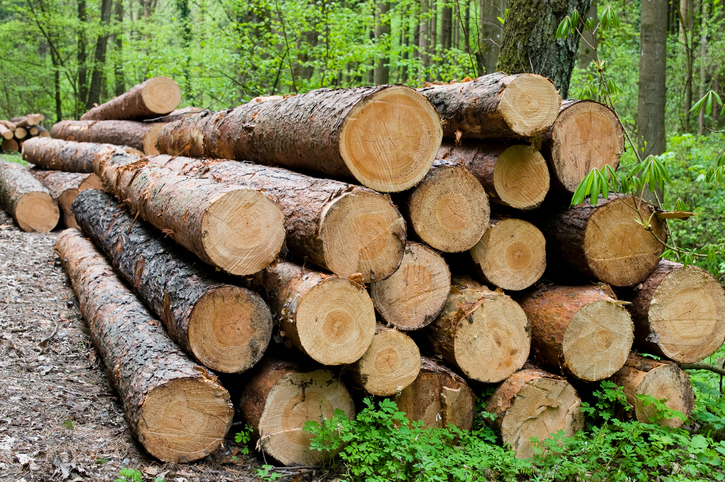
A) Log : Stem or trunk of a tree which is felled.

Log of Timber

B) Baulk : A piece of sawn timber, cross sectional Dimension of 50mm in one direction & 200mm in other.

C) Bole : The main stem of a tree

D) Bolt : A Short log 1.25m or less in length.

E) Billet : Short length of a thin stem or branch wood.

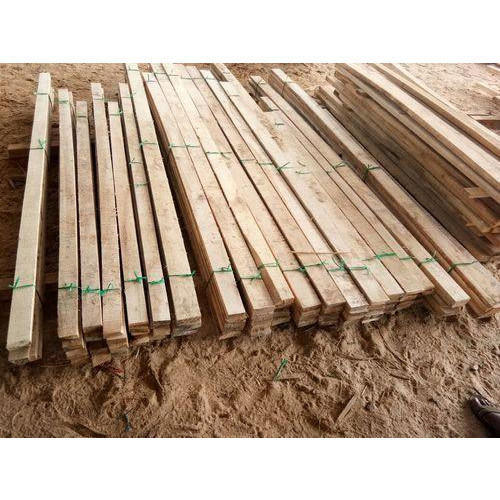
F) Batten : Piece of sawn timber, the cross sectional dimension of which dn’t exceed 50mm.

Batten of Timber

G) Plank : Thickness not exceeding 50mm & width exceeding 50mm.

h) Board : A thin plank under 50mm thick & 100mm More Width.

I) Cant : A thick piece of timber with or without squared edges.

J) Deal : A sawn piece of wood which is 50-100mm thick & 200-250mm wide.

K) Deal Wood : Light timber used for packing cases,crates.

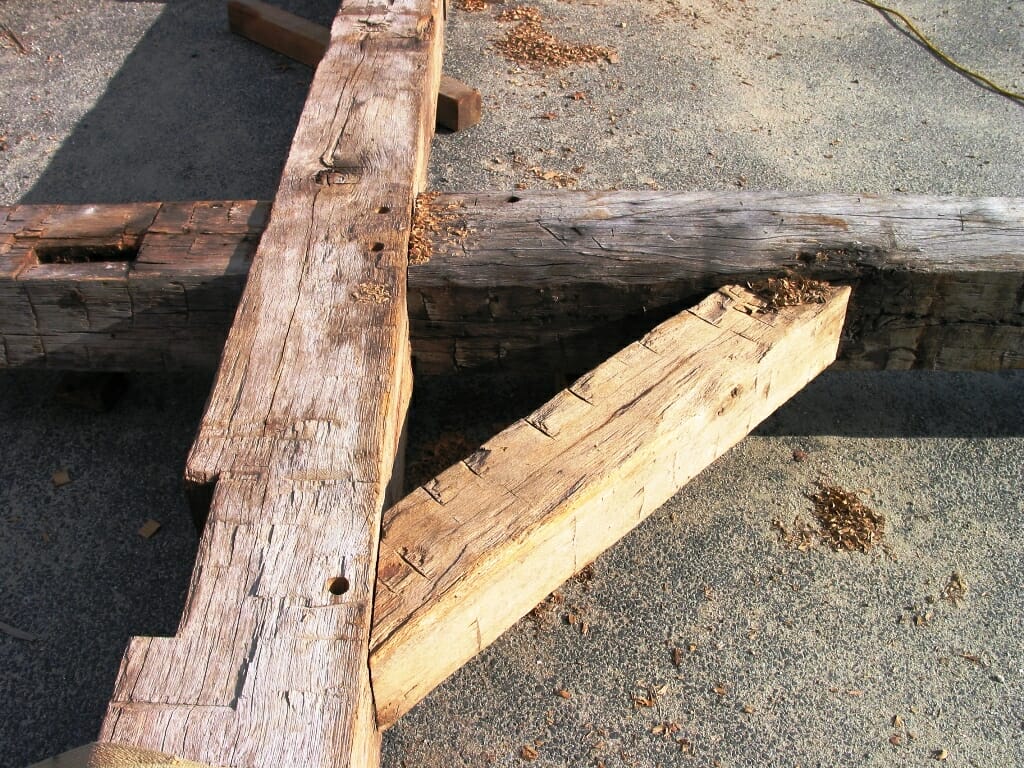
L) Hewn timber : Timber converted to size by an axe and the end.

Hewn of Timber

M) Pole : A long, soild, straight trunk of a tree 100 To 300mm in dia.at breast height & gradually to the top, Of a diameter of 100mm or more.

N) Post : Timber member used in upright position in Building fencing or structural work is called a post.

Timber as a Railway Sleepers

O) Scantling : Sawn Piece , dimensions of which Exceed 50mm in both the direction bt dn’t exceed 200mm In length.

P) Slat : Wood about 185mm x 65mmx 6mm in size.

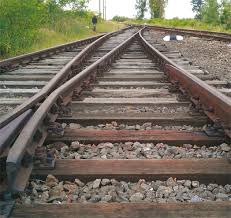
Q) Sleeper : Transverse supports under rails in a Railway track. 250mmx125mm or 200x115mm.

R) Strip : under50mm thick & less than 100mm wide.

https://www.facebook.com/ArchitectureInteriorDesignStudio/

https://www.instagram.com/tanyadecor1/

BUILDING MATERIAL – Timber Types & Classification

Timber derived from Timberian which mean to build.The wood used for building or other engineering purpose is called timber.

It is a first construction material used by a man since pre-historic ages.

Timer is a natural material. Trees provide shelter from sun and the rain.

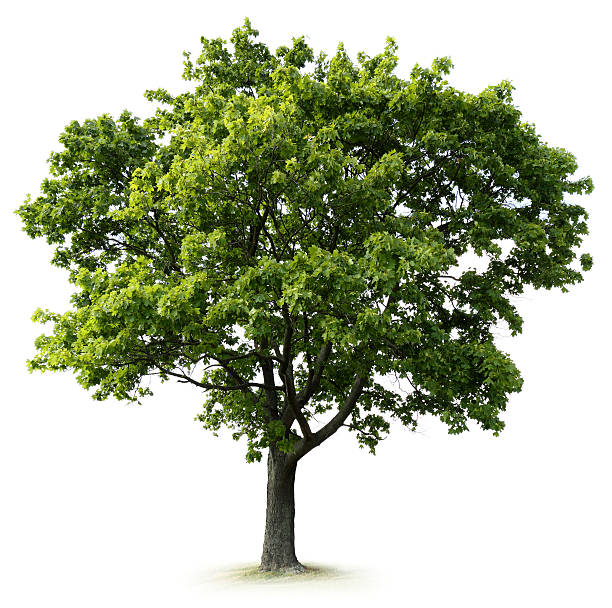
Tree: Maple Tree

Trees conserves soil moisture. It precipitate rainfall & lower temperature .A single Tree can cool the summer heat better than 20 Air conditioners.

It prevents depletion of the ozone layer of the atmosphere. It prevents soil erosion.

Trees produces oxygen and purifies the air.

Timber :

Timber

Timber obtained from trunk of a tree. There are many varieties of timber available all over the world.

Advantages :

Timber is strong than any other material. Timber can be easily worked to any size & shape. It can be jointed to required form.

Timber can used for furniture & decoration fittings. Structural connections can be easily made in timber. Timer are light in weight, quite durable.

Its resale value is good. Its non conductors of heat & sound.

Timber uses in construction

Classifications of Timber :

1)Exogenous Trees

2)Endogenous Trees

Exogenous Tress :

Trees which grow outwards and increase in bulk by the formation of successive annual rings are known as exogenous trees.

Exogenous Trees Structure

Timber which is used for building engineering works,Is Mostly obtained from exogenous trees. Examples : Deodar, Kail, Sal, Teak, Shishum, Chir etc .

Exogenous trees are further divided into following two types:-

1)Conifers or Evergreen Trees

2)Deciduous or Broad – Leaf Trees

Conifers or Evergreen Trees : Soft Wood

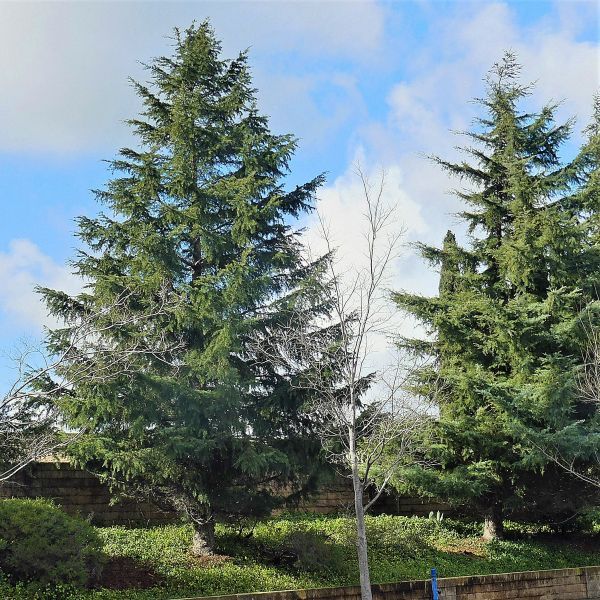
Trees which remain evergreen & bear fruits.These trees usually yield soft wood & show distinct annual rings. They are light in color & weight.

They can easily split & are resinous. They are comparatively weak in strength. Example :Pine, Deodar, kail, Chir,walnut etc

Deodar – Conifers Tree

Deciduous or Broad Leaf Trees : Hard Wood

Trees which shed their leaves in the autumn &put on new leaves in the spring season are known as deciduous or broad leaf trees.

These trees usually yield hard wood & dark in color, Hard, close grained and strong.They are useful for important engineering works. Example :Sal, Teak, Shishum, Babul, Ash, Mahogany etc.

Deciduous or Broad Leaf Trees

Endogenous Trees :

Endogenous trees which grow end wards in a longitudinal fibrous mass are known as endogenous trees.

These trees are too flexible & aren’t suitable for engineering works.Example : Canes, Bamboos , palms etc

Endogenous Trees Structure

Comparison Between Hard Wood & Soft Wood

https://www.facebook.com/ArchitectureInteriorDesignStudio/

https://www.instagram.com/tanyadecor1/