The Stone which are to used for face work should be decent appearance. These should be capable of preserving their colour uniformly for a long time.
The Stone should have a uniform & pleasing colour & free from cavities,cracks,flaws & patches of loose & soft materials.
2.) Strength :
Stone has sufficient crushing strength to withstand the load of superstructure.Generally n’t less than 1000 kg/cm2.
3.) Hardness ,Toughness & Resistance to abrasion :
Stone are used for staircase , pavements, road metal or railway ballast should be sufficient hard,tough & resistance to abrasion.
4. ) Durability :
It is durable enough to resist the effect of weathering agencies. They should have fine grained , compact & crystalline structure.
5.) Texture :
Stone has suchg texture are strong & durable.
6.) Work ability :
Stones to be used for ornamental carving and architectural work , should be easily & economically dressed.
7. ) Seasoning :
Stone is used for interior work also so it should be proper seasoned because the presence of moisture makes stone soft & liable to an early decay when used in structural work.
8.) Porosity :
Stone should have less porosity. It should not absorb water more than 5% of its own weight when kept immersed for 24 hours.
9.) Resistance to Fire :
Stone should be able to resist high temperature. Its mineral constituents should have equal coefficient of expansion.
10.) Specify Gravity :
Stone to be used on heavy engineering works,docks,gravity,dam etc. should have high specify gravity.
11.) Resistance to Electricity :
Stone should be Non -absorbent like marble & slate so that they can offer good resistance to electricity.
Stone/Rocks are classified in the following three ways :
1) Geological Classification
2) Physical Classification
3) Chemical Classification
A) Geological Classification : Based of formation of Rocks & further classified three types :
i) Igneous Rock
ii) Sedimentary Rocks
iii) Metamorphic Rocks
i) Igneous Rocks :
The rocks formed directly by solidification of molten material , either on surface or the surface of earth called Igneous Rocks.
Ex : Granite, Basalt, Trap & Delorite.
Formation of Igneous Rocks :
At a certain depth , the temperature of material with in the earth’s crust become so high that the existing material may acquire a molten state is called Magma.
When the molten material out from earth called Lava. When the molten condition change due to temperature, pressure & chemical composition ) surrounding the magma, it changes into a solid state in the form of simple solid masses known as Igneous Rocks.
These rockes divided further three classes :
Plutonic
Rocks
Hypabyssal
Rocks
Volcanic
Rocks
Plutonic Rocks : formed due to cooling of magma at a considerable depth from earth surface. The cooling is slow & the rock posses coarsely grained crystalline structure. Ex Granite.
Hypabyssal Rocks : these rocks are formed due to cooling of magma at a relatively shallow depth (2-3 KM) from the earth surface. The cooling is quick & possess finely grained crystalline structure. Ex. Delorite
Volcanic Rocks : Formed due to pouring of magma at a earth surface. The cooling is very rapid. Hence these rocks are extremely fine grains in structure.
They frequently contain some quantity of glass which is a non crystalline material. Ex. Basalt.
ii) Sedimentary Rocks / Stratified & Aqueous Rock :
these formed by consolidation/break of particles of the pre- existing rocks, under the effect of weather agencies (ice,water, air, sun heat , gases etc) are called sedimentary rocks.
These are most widespread rocks found
covering a great part of earth.
Ex. : Gravel, sandstone, lime stone, lignite etc.
Formation :
Disintegration of pre-existing rocks under the effect of weather agencies.
Transported by these natural agencies to river beds , lake basin, seas & ocean or in suspension to other place.
Setting down the suspended particles or precipitation of the soluble constituents.
Compaction and consolidation of the deposited sediments either due to pressure or chemical action like silica, lime ,iron etc.
Sedimentary following four types of deposit occurs :
A) Residual Deposits
B) Sedimentary Deposits
C) Chemical Deposits
D) Organic Deposits
Residual Deposit : Some portion of product of weathering remain at the site of origin known as Residual Deposits.
Sedimentary Deposits : The soluble products of weathering are carried away in suspension and when such products are deposited, they give rise to the sedimentary deposits.
Chemical Deposits : Some material carried away in solution may be deposited by some phsio – chemical processes such as evaporation , precipitation etc.
Organic Deposits : Some portion of the product of the weathering gets deposited through the agency or organisms.
iii) Metamorphic Rocks :
The rocks formed from the pre- existing rocks with in the earth crust, under the influence of variation in temperature or pressure are called Metamorphic Rocks.
Ex : Marble , Slate & Gneiss etc.
Formation :
The pre- existing rocks within the earth crust don’t change their state so long as their temperature& pressure remain unchanged known as Metamorphic rocks.
Marble : Lime Stone
Slate : Shale
Quartzite : Sand Stone
Gnesis : Granite
Following four types metamorphic occur with various combinations of heat , uniform pressure & directly pressure :
A.) Thermal Metamorphism – The heat is the pre-dominant factor.
B.) Cataclastic Metamorphism – At the surface of earth, the temperature are low & metamorphism is brought about by directed pressure only.
C.) Dynamo – Thermal Metamorphism – There is a rise in temperature with increase in depth. The heat in combination with stress, bring about the changes in rock.
D.) Plutonic Metamorphism : The stress is effective only upto a certain depth. This is due to the fact that rocks become plastic in nature at certain depths. The metamorphic changes at great depths are therefore brought about by uniform pressure & heat.
2) Physical Classification : Based on physical properties.
Further
classified into three types :
Un-Stratified Rocks :The rocks which don’t show distinct signs of layers and cannot be easily splited up into the layers are called Unstratified rocks. The structure may be crystalline granular ex : Granite, Basalt & traps etc
Stratified Rocks : The rocks which show distinct signs of layers and can be easily splited up into layers are called Un-Stratified Rocks. Ex : Sand Stone , Lime Stone etc
Foliated Rocks : The rocks which can be splited- up into thin sheets or in a definite direction known as as foliated rocks.
Ex : Slate , Schist etc.
3.) Chemical Classification :
Further classified into three types :
1.) Siliceous Rocks : The rocks having silica (SiCO2) or sand as their major constituent are called Siliceous Rocks.
These rocks are hard & durable. They aren’t easily affected by the weather agencies. Ex: Granite , Sandstone , Quartzite etc.
2.) Argillaceous Rocks : The rocks having Alumina (Al2O3) or clay as their major constituent are known as argillaceous rocks. These rocks may be dense and compact or may be soft like mud stone etc.
3. ) Calcareous Rock : These rocks having calcium carbonate (CaCo3) or lime as their major constituent are called calcareous rocks. The durability of these rocks will depend upon the constituents present in the surrounding atmosphere. Ex : Lime Stone, Marble & Kankar etc.
A natural material
of construction obtained from rocks by any suitable method is call Stone & which is used for
construction of structure called Building
Stone. Stones are naturally occurring (compact, solid & massive )
building material.
Building Stone are obtained from a quarry by disintegration of Rocks. The Good Stone are not easily & cheaply available everywhere/ every state & are difficult to handle because of heavy in weight.
Uses :
Now a days , brick in cement mortar & cement
concrete are replacing stone as a building material.
Construction of heavy & permanent engineer structure such as dam, docks, harbours, light houses, abutments & pier of bridges etc.
Their uses for building work in hilly areas, where a good quality of stone is easily & cheaply available.
Stones used as an aggregates for concrete.
Slabs for paving floors.
Flags for paving streets.
Ballast in railway tracks.
Road Metal
The pyramids of Egypt , The Temple of Jagannathpuri, The Taj Mahal ,The Red Fort ,The great China Wall etc. hundred of historical building are made of stones.
A good brick earth can easily be moulded and dried without cracking and warping.
A good brick earth should have the following composition:
Alumina or clay 20 to 30 percent by weight.
Silica or sand 35 to 50 percent by weight
Silt 20 to 35 percent weight.
Remaining ingredients which include : Lime (cao) , Oxide of iron ,Manganese oxide , Manganese , Sodium potash etc. 1 to 2 percent by weight
Alumina :
It is the principal constituent of every kind of brick earth. A good brick earth should contain about 20 percent to 30 percent of alumina.
It imparts plasticity to the brick earth, which is essential for proper moulding of bricks alumina or clay in brick earth shrinks and cracks on drying. It also warps and becomes very hard on burning unless mixed with sand.
Silica :
A good brick earth should contain about 50 percent to 60 percent of silica. Sand alone is in fusible but it fuses in the presence of lime and oxides of iron at kiln temperature.
Sand or silica in brick earth prevents the shrinkage, cracking and warping of bricks. It also makes the bricks durable. Excess of silica makes the bricks brittle and weak.
Lime :
A small quantity of lime not exceeding 5 percent is desirable in good brick earth.
It helps to bind the particles of brick earth together. It also reduces shrinkage of bricks.
Oxide of Iron :
A small quantity of oxide of iron to the extent of about 5 to 6 percent is desirable in good brick earth and binds the particles of clay together.
It also provides the required red colour to the bricks on burning but excess of oxide of iron makes the bricks dark blue.
Magnesia :
Small quantities of magnesia in bricks of yellowish colour and reduce shrinkage. But excess of magnesia leads to the decay of bricks.
Manganese :
The presence of manganese in small quantity in brick earth makes the bricks darker or even black.
Classification of Fire Bricks : Following three Types :
Silica fire bricks / Acidic Bricks :
These are acidic in character 95 % Silica & their raw material is pure quartz (sio2); or sandstone of high silica content. The moulded units are burnt to around 1500c. Manufacture from Sand Stones, Quartzite etc.
Uses : Lining of furnaces to resist the action of acidic slags.
Magnesite Fire Bricks / Basic Refractories :
They are classed among the basic refractories. Principal raw material is magnesium oxide for which the rock dolomite is a major source.
Bauxite Fire Bricks :
These also form a very important class of basic refractories. They are made from the rock bauxite. (al2o32h2o) which may be mixed with some clay (fire clay type).
Uses :
Blast Furnace, Copper Furnaces etc.
Chromite Fire Bricks :
Neutral class of Refractories. Raw material used for these bricks is a mineral called CHROMITE.
This mineral is a double oxide of chromium and iron in its composition for making refractories some alumina and silica are also added to make a typically neutral material chromite fire bricks are capable of resisting both the acidic and basic environments in a furnace. These find extensive applications in the steel making furnaces.
Scandinavian interiors are a balance of functionality
and aesthetics.
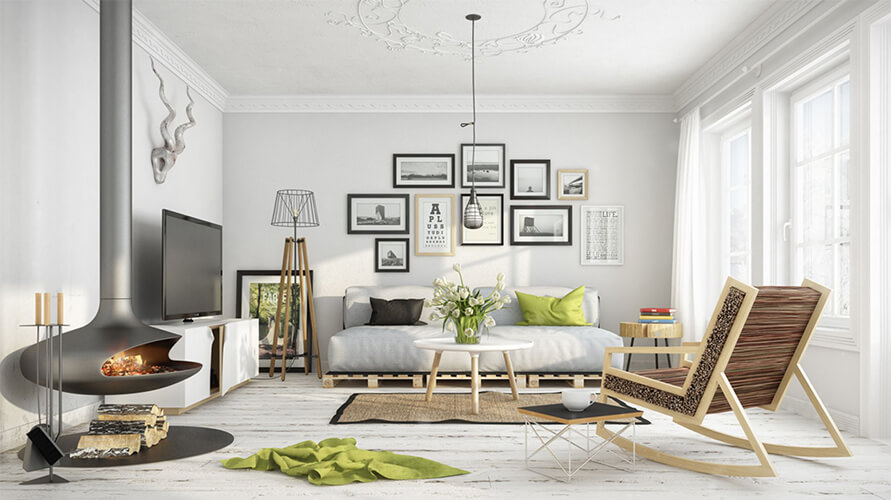
Scandinavian style is characterized by three key components – functionality, simplicity and beauty.
5 Design Element :
1 ) LIGHT :
Lighting is used is very important in a Scandinavian interior design. Lighting is considered a life source and the Scandinavian decor should have different forms of lighting to provide adequate illumination in the entire space.
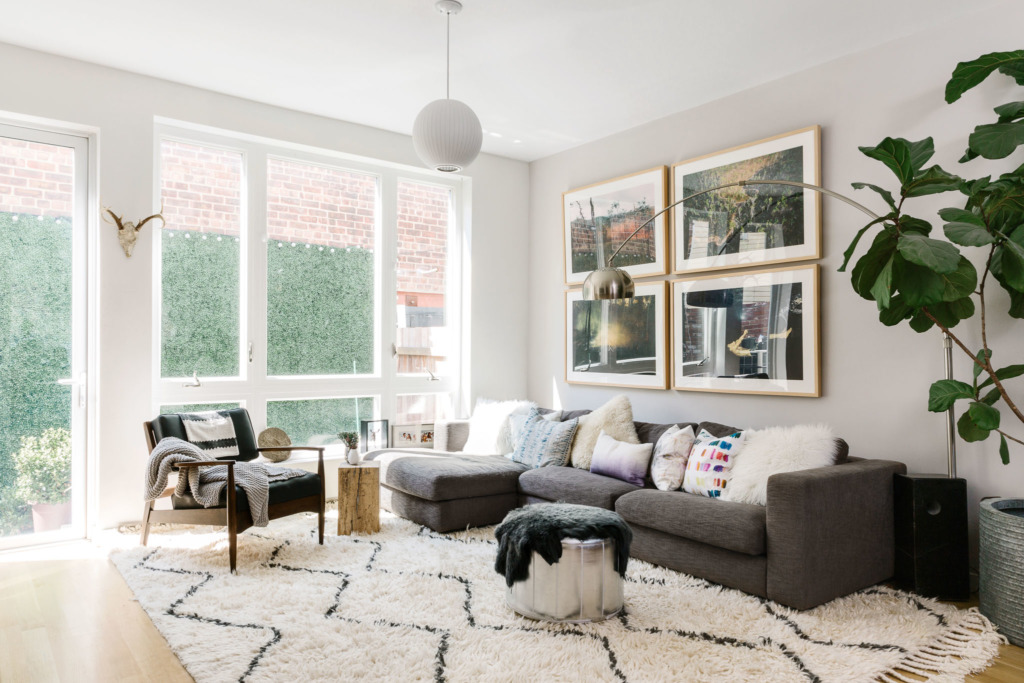
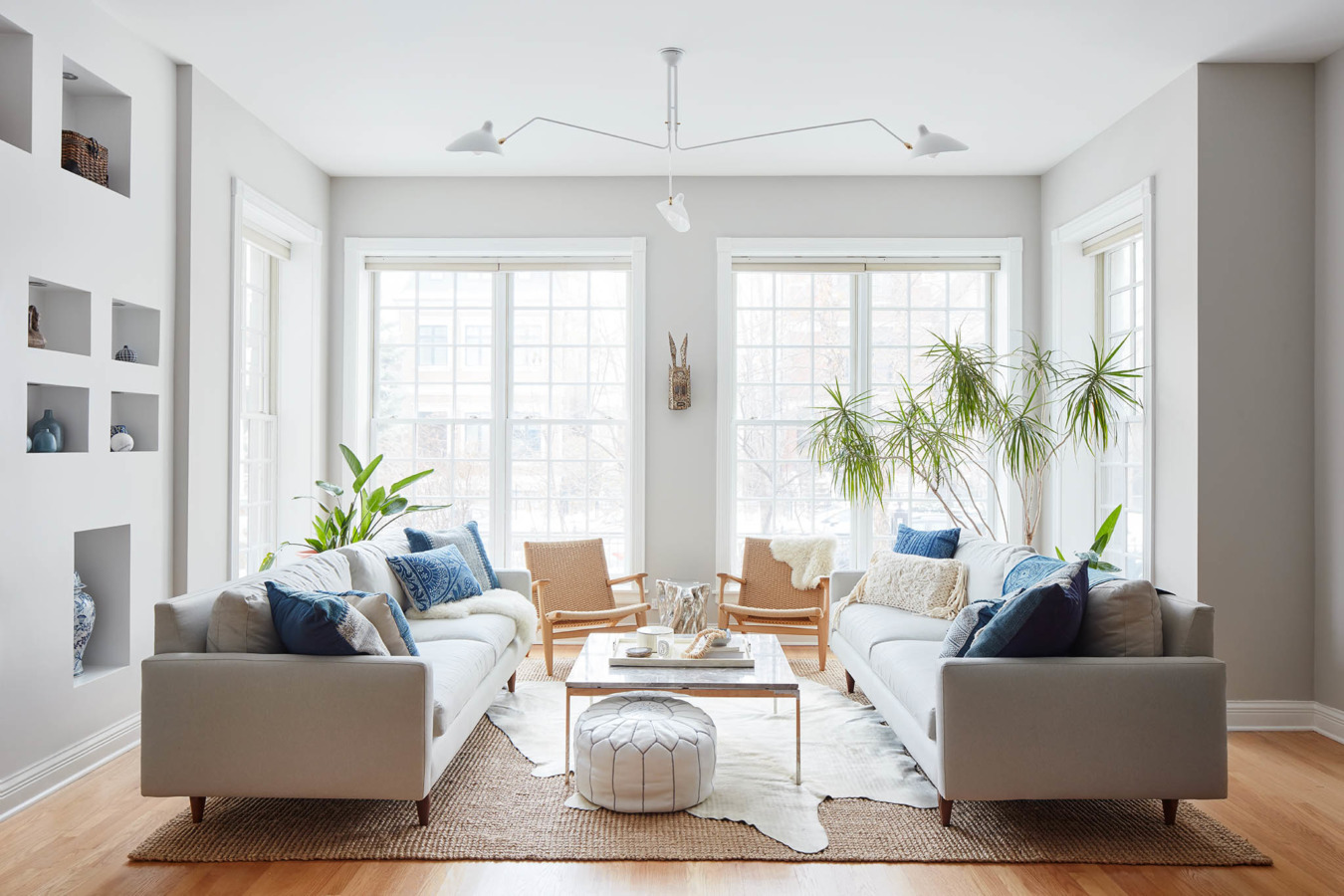
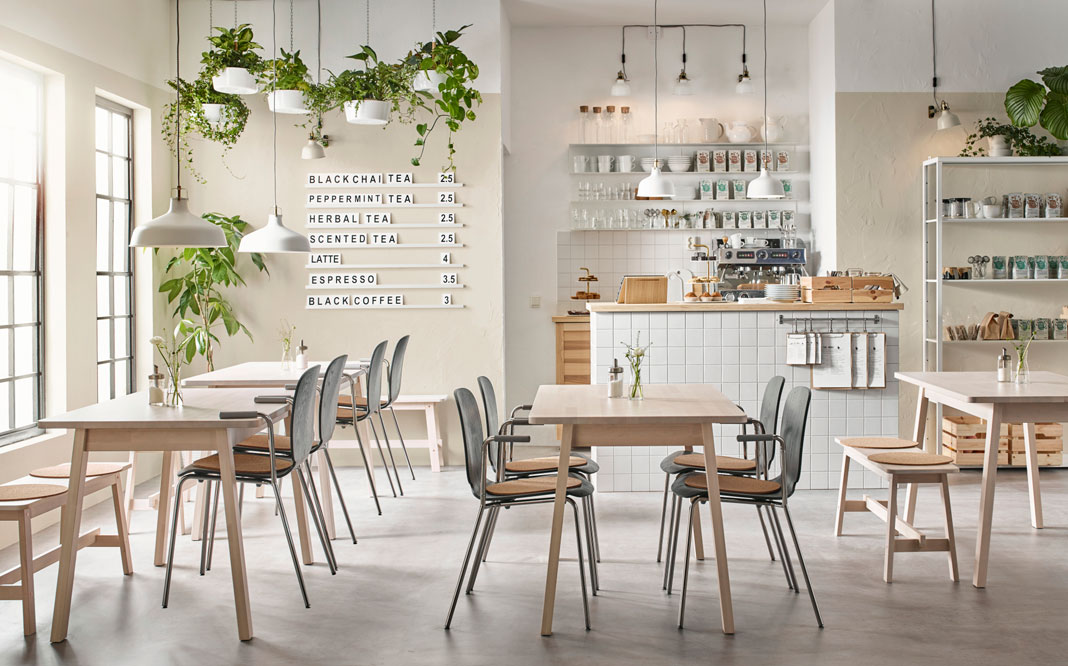
Natural lighting is used to make a space feel bigger and brighter. The spaces are designed with large windows that let in an ample amount of natural light.
In Scandinavian countries, a large portion of the year is dark. That why Nordic people have adapted in a beautiful way by putting a focus on natural light.
Scandinavian homes often feature large windows to make the room feel bright and open.Windows free from obstructions and white curtains. Allowing the light from outside. A place where no artificial lighting is needed throughout the day.
Table and floor lamps are also regularly used to set the mood. More commonly, minimalist light fixtures are used.
Accessories can also help bring brightness to the room, such as use of large mirrors to reflect natural light.
2) FORM & FUNCTION – Straight Lines :
One of the basic concepts of a good Scandinavian style interior is a focus on the workability of the layout or plan. This functionality makes this style a very pragmatic yet visually desirable.
The design style puts a huge emphasis on efficient use of space, making maximum use of any awkward spots. It works well with small spaces due to the inherent simplicity of Nordic style, with white as a predominant colour and an avoidance of unnecessary accessories.
It’s common to see multi-leveled wall shelving in a Scandinavian living room. These storage spaces are innovative and space-savvy and add visual interest to the space.
Scandinavian design, clean lines should be evident. Tables, chairs, sofas, and the rest of the Scandinavian decor should have a modern touch with smooth and rounded edges.
All the basic elements of this style – furniture, windows, and product designs – are carried out in clean cut, straight forward lines.
3) COLOUR PALETTE – Neutral Color :
The colour palette is typically very light and simple. Neutrals – with bright white being the star – dominate the Scandinavian design. Preference for sober colors doesn’t, however, mean that Scandinavian design is devoid of vibrancy and vitality.
Scandinavian design often boasts a neutral-heavy color palette.
Because winters are long and dark in Northern Europe, Nordic design utilizes
whites, greys, and tans to make a space feel uniform and bright. Often, accents
of blue and other bold colors are incorporated loosely throughout.
These calm colors make rooms appear bright and spacious even on a dreary day, an important interior decorating tip for recreating the original Nordic ambiance.
There’s a particular
color palette that’s associated with the Scandinavian decor and this includes
the hues of grays, whites, browns, and blacks.
White is also a great blank slate to introduce any colour combination, from soft pastels to black accents. Cool whites work well in south-facing rooms since they receive the best of the warm, summer daylight. Warmer whites, on the other hand, work well to warm up north-facing rooms, since they receive lower levels of cooler, natural light.
Greys can also be used to create a beautiful, serene interior. When deciding on warm or cool shades of this neutral, look to the same rules for white – cool for south-facing rooms and warm for north-facing rooms.
4) TEXTURE & MATERIALS :
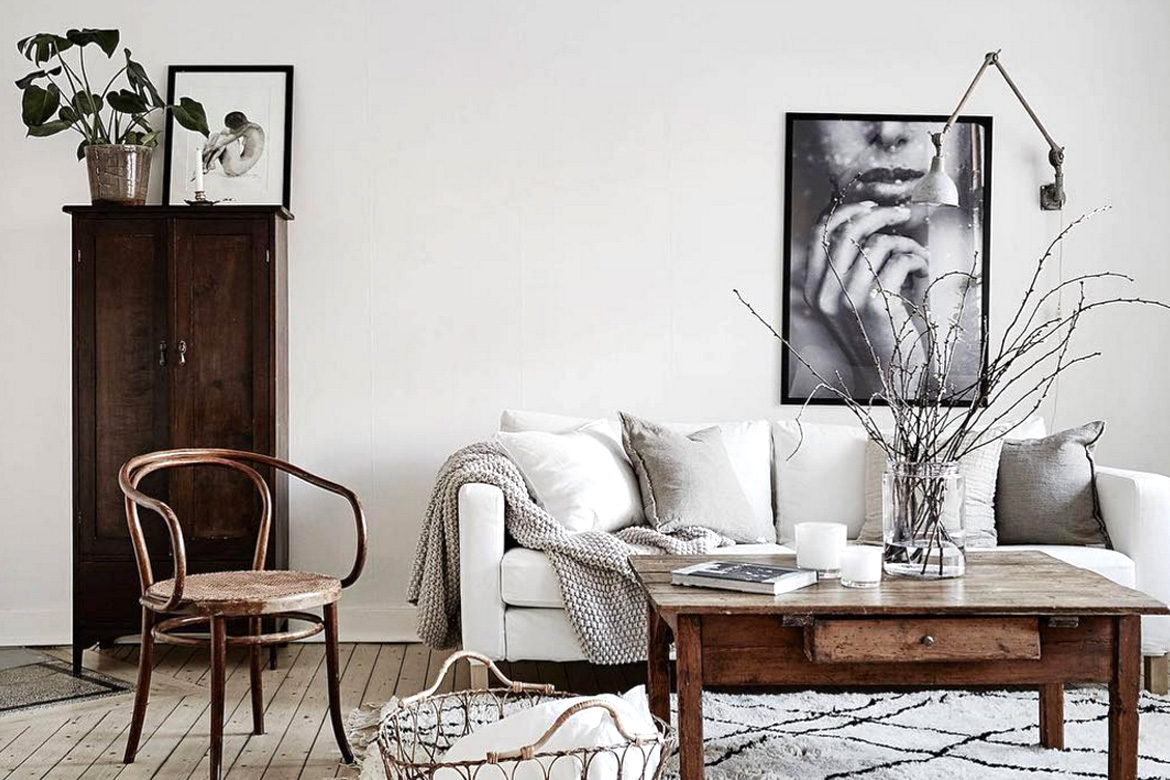
Mixing textures and materials, such as unfinished wood pieces, fur rugs, and soft linens, brings nature into the home, adding that restful vibe that the decor is so famous for.
Scandinavians believe in celebrating nature even when inside their homes. That’s why natural wood is a predominant feature of Scandinavian interiors characteristics. Wood is the preferred choice not only for the Nordic furniture but also of flooring.
A Scandinavian design makes use of wooden elements not only in the flooring but also in the furniture and fixtures. Thus, a Scandinavian house usually has wooden coffee tables and chairs for its furniture.
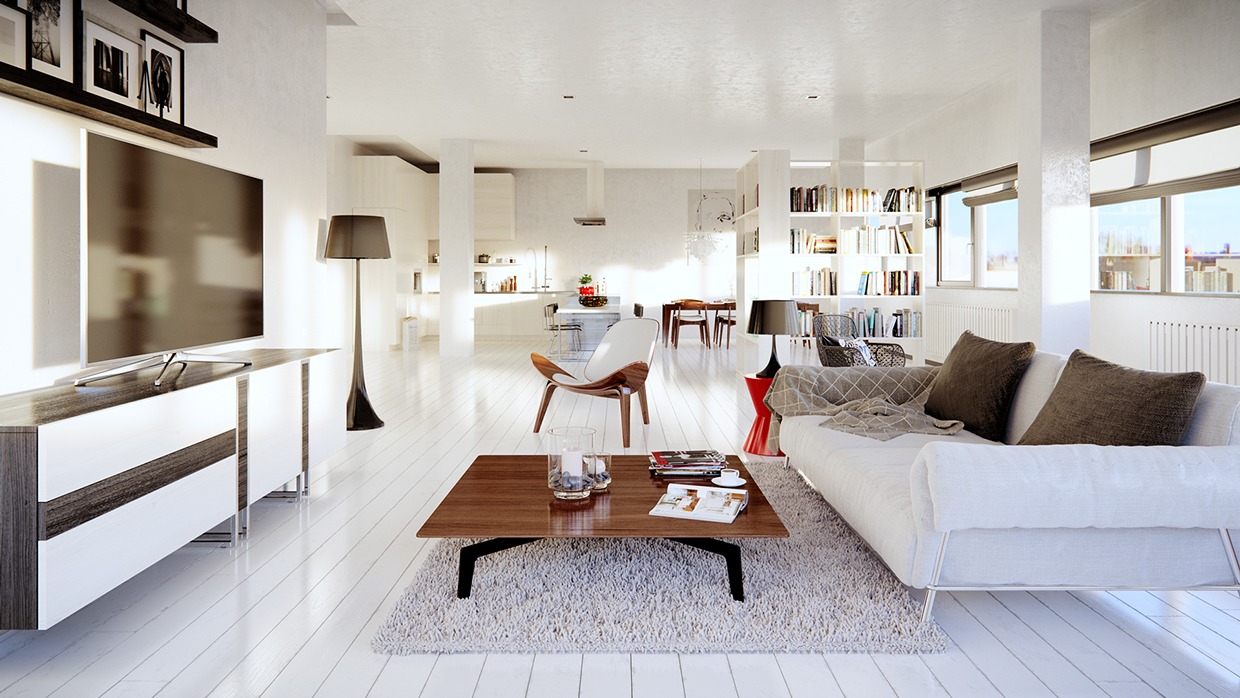
The Scandinavians are well known for their use of wood throughout their homes, largely due to an appreciation for readily available natural materials, but also for the way in which it adds warmth to the space. Wooden flooring is a staple in Nordic interiors. The wood is often light in colour and used in all rooms.
Pine, beech, and ash are by far the favorites of the Scandinavian architect. Stains and varnishes have generally kept the light in order to maintain a feeling of airiness.
Scandinavian design principles promote eco-friendly homes with organic, sustainable building materials for flooring, walls, siding and roofing.
The recent trend in the Scandinavian style of decorating combines the use of metallic finishes and wooden elements. For instance, copper sconces and brass pendants are installed in a wooden ceiling to add glimmer and shine to the entire space.
5) FRESH FLOWERS AND GREENERY :
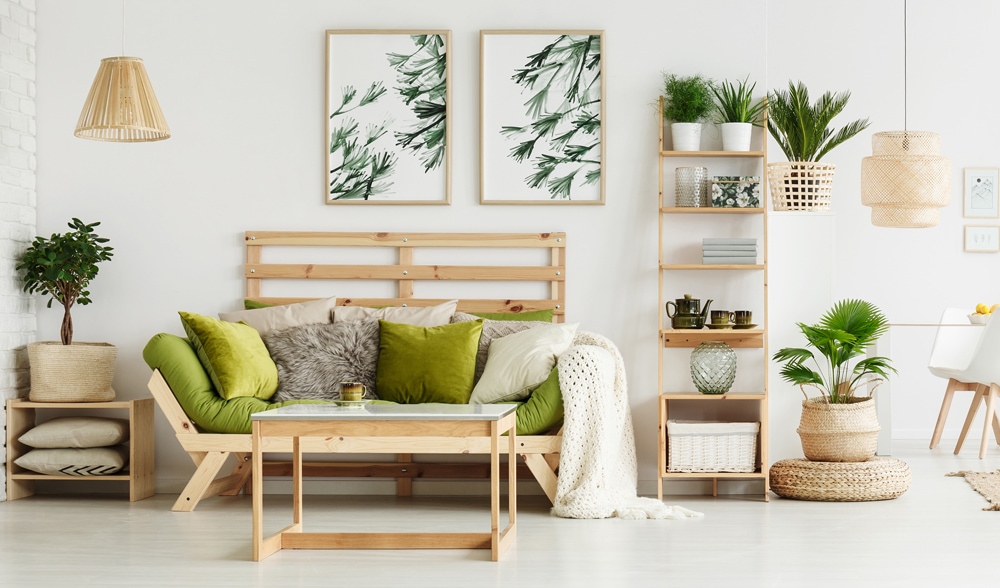
Scandinavian interior design in order to have a living element of color and beauty. Plants, flowers, and other botanicals are used to brighten up spaces and breathe life into a room. These living elements offer a pop of color and add to the natural, minimalist essence of of Scandinavian design.
In the Scandinavian region, streets are often lined with sidewalk florists selling fresh flowers and tulips in every color.
Scandinavian design channels the outdoors through bright, natural lighting and lush greenery, so your backyard is the ideal space to embrace the style. Patios both big and small can adopt Scandinavian characteristics to transform the space into a minimalist haven.
For smaller patio spaces, look for an intimate wooden
table and chair set. Add potted succulents or other low-maintenance greenery
atop your table for a modest Scandinavian display.
“Less is more,” wrote the poet Robert Browning in the 19th century.
Scandinavian interiors, there’s always a strong relationship between design elements and nature.
Design Principles of Scandinavian Interior :
The key principle of the Scandinavian interior is function without sacrificing aesthetics & Simplicity. A one-word definition of Scandinavian decor would be minimalism.
Simply Scandinavian is a book by Sara Norrman which celebrates unpretentious and simplicity with understated elegance in interior design.
The main purpose of Scandinavian design is to improve daily life. To accomplish that, designers focused on interior design style with furniture, lighting, textiles, accessories, and everyday utilitarian items like dishes, silverware, cooking utensils and linens.
Scandinavian rooms are typically light, airy and bright, with modern furnishings mixed with pretty antiques and vintage pieces. It’s often seen in the stark contrast between abstract and natural shapes, as well as hard and soft surfaces and materials. Natural materials like stone, wood, leather and hemp are completes the style of cool, calm and uncluttered living spaces.
The Scandinavian interior design philosophy is minimalism, simplicity, and functionality. The minimalist philosophy emphasized clean lines and simple designs that were inspired by nature and climate to create the Nordic design.
Although the Scandinavian design has been around since the 1950s, it still remains a popular trend in interior design today.
Scandinavian design characterized by a focus on functionalism and simplicity. It also includes the use of natural materials, such as leather, wood, and hemp. Furthermore, a Scandinavian interior design is often influenced by a connection to nature, which combines natural shapes, abstraction, and the use of natural elements.
Origin and Development :
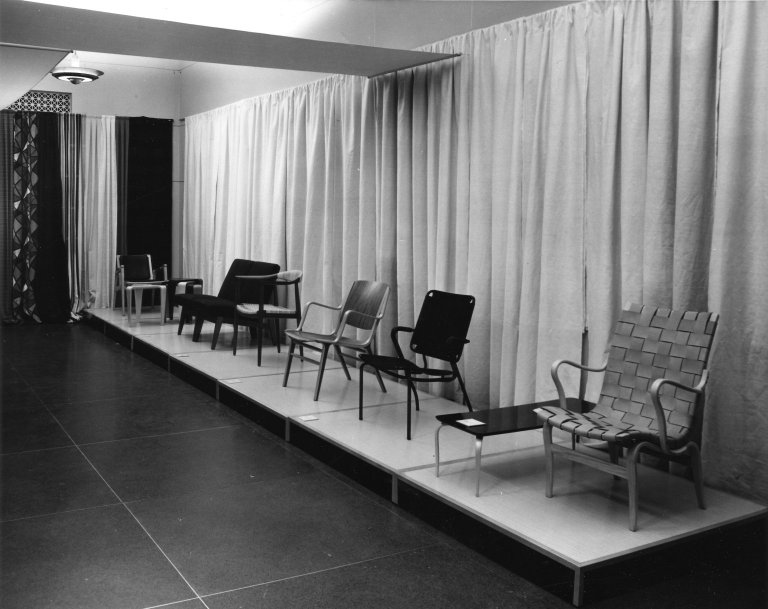
The minimalist style of Scandinavian design emerged during the 1930s within the five Nordic countries of Denmark, Finland, Iceland, Norway and Sweden. The term “Scandinavian design” originated from a design show with the same name that traveled through the United States and Canada between 1954 and 1957. It promoted simplistic ways of living and showcased various works by Nordic designers.
Exhibitions showcasing Scandinavian design during the 1950s played an important role in the influence of these design principles in Europe and North America.
Within the golden age of Scandinavian design from the 1930s to the 1970s, there were a number of prominent furniture designers that had a huge impact on design philosophy and style.
Founders of Scandinavian philosophy and style, their influence on modern design is still evident today in areas like San Francisco and San Mateo . The brilliant Scandinavian designers who rewrote history with their innovative designs include Alvar Aalto; Poul Henningsen ; Arne Jacobsen; Borge Mogensen; Verner Panton; Hans J. Wegner; and Maija Isola.
This thinking reflected the growth of social democracy in Sweden and other Scandinavian countries over the same (post war) period, in addition to the availability of mass-produced low-cost materials and mechanisation of production. Scandinavian design made full use of pressed wood, plastics, anodized or enamelled aluminium and pressed steel.
The signature elements that came to define the Nordic style—minimalist white walls, wood floors, and modern furniture.
Wood plays a significant role in Scandinavian style. It is used
for floors, walls, furniture, lighting and accessories. But also natural
fabrics create a feel-good atmosphere with their light shades in the Skandi
style.
Scandinavian
design continues to be a leading source of inspiration for interior design.
Below, explore the signature characteristics of the movement and uncover quintessential Scandinavian designs — whether it be Hans Wegner‘s Wishbone Chair or Poul Henningsen’s iconic pendant lighting.
Key characteristics of the style :
The mid-century life in the region was
primarily responsible for shaping Scandinavian design. Long, harsh winters with
very few hours of daylight kept people indoors for many months and shaped the
Nordic look. Besides, most people lived in small houses, an explanation for the
Scandinavian minimalist style . Therefore, it was imperative to make
homes feel cozy yet airy, with every object in it reflecting as much ambient
light as possible, the main features of the modern Scandinavian style.
The Scandinavian style is characterized by the seasons in the north, where the days in winter are very short. This results in the need to create warmth and comfort in this wintry environment.
The Scandinavian style
originates from Nordic roots and expresses a soft, muted interior palate. This
style is most characterized by an elegant and sophisticated look. The overall
impression is modern yet minimal. The Scandinavian style shies away from the
richness and intricacies of traditional styles and focuses more on the
contemporary elements. An ideal Scandinavian interior stems from a focus
on functionality, pragmatism and clean, minimal aesthetic. It strives to be as
straightforward and as clutter free as possible.
The 1990’s saw a huge rise in popularity of SCANDINAVIAN DESIGN, when designers began creating bold, unique statement pieces as individual units of design.
Scandinavian interiors are a balance of functionality
and aesthetics.
Scandinavian style is characterized by
three key components – functionality, simplicity and beauty.
Although simple in design, clean lines are
often incorporated with understated elegance and warm functionality, which
creates a very homely feel.”
The environment in the Nordic countries was
largely responsible for the design that evolved. Winters were long, meaning
there was little daylight, and people often had very small houses, causing the
need for bright and airy, yet cosy, homes.
Scandinavian interior design uses a blend of textures, contrasts, and soft hues to make sleek, modern furniture feel warm and inviting. It’s no small feat to be able to exercise restraint in your décor choices while still managing to make a space feel cozy.
Scandinavian interior design is known for its
minimalist color palettes, cozy accents, and striking modern furniture. Designs
often play with natural light—which is a hot commodity in Nordic countries.
Its relative simplicity
makes the Scandinavian style a design darling of the contemporary world. Below,
we will be observing several elements that make up the Scandinavian style.
Not everything has to match, and many homes mix vintage and traditional elements with the notorious simple and clean lines that we all know and love.
Three Following Types of Perforation or Cavities Bricks :
Perforated bricks
Hollow bricks
Channeled bricks
Perforated Bricks :
These form a modern class of building bricks.
Four perforated bricks of white, yellow and red colors with round and rectangular holes on a pallet with bricks on the background other bricks on a warehouse
In perforated bricks cylindrical, rounded or rectangular holes are made in the bricks after the moulding stage. These holes are called perforations.
They are properly spaced from the side of the brick, minimum distance being 15mm. further, distance between any two perforations is not less than 10mm the volume of the perforations. May be as much as 20-50 percent of the total volume of the brick.
Advantages :
These bricks are light in weight.
Less quantity of clay is required for their manufacture;
Less time is required for drying and burning of perforated bricks.
These offer better resistance against rain penetration and better insulation against heat. As such they are ideally suited for tropical countries.
Efflorescence is least in perforated bricks.
These are specially suitable for construction of brick panels in- multi-storeyed structures.
Hollow Bricks :
A brick also called cavity brick or cellular brick has a few well- defined sets of cavities with specified dimensions made in the body of the brick.
Its net weight may be only one- third to one- half of the solid brick. It is important that the thickness of brick wall near the cavity should not be less than 2 cm. Hence cavity extends throughout the body of the brick.
The hollow bricks are made from special type of brick clay (which should have higher clay content).
Advantages :
Being
light in weight, they can be handled more conveniently and the output of the
mason may be three to four times compared with ordinary bricks.
They
offer better insulation against heat and sound.
They
are ideal and economical for non- load bearing walls, e.g in partition walls.
Channel or Gutter Bricks :
They are actually special purpose bricks having a continuous central semicircular cavity or depression running through their length very often they are glazed to make them impervious.
















 Tanya Decor